If you have an aging parent who is a primary caregiver it can be hard to know what to say and do. Caregivers, especially spouses, may be hesitant to ask for help or a break. They may think that this is part of the vow that they made, thru sickness and health. These 5 tips will give you some ideas of how to be helpful.
1. Be there for the caregiver
Simply being present and showing up for your caregiving parent can provide them with comfort and security in knowing that they’re not alone. Caregiving can be challenging and rewarding.Hold space for both experiences. Some ways to be there and be present include:
- Calling and checking in with your caregiving parent regularly
- Acknowledging the importance of the care they’re providing and the value that caregiving has.
- Validating how hard caregiving can be emotionally and physically.
- Identifying the meaning caregiving is bringing to you and the family (e.g., “it’s lovely to see how nurturing you are, it’s teaching me how to do this when it’s my turn.”)
2. Offer to research and arrange for additional formal care options
like home health assistance (HHA), adult day programs, or respite care. Your caregiving parent may not be familiar with these options, or may feel too overwhelmed with day to day caregiving tasks to take the time to investigate and arrange formal caregiving options. This is where you come in. Offering to take the time to research formal care can help. There’s an added benefit to this as well- Implementing formal caregiving resources can help delay placement of an older care recipient into assisted living and reduce stress for the caregiver.
- Find respite here: ARCH National Respite Locator Service
- Find Adult Day Programs through your Area Agency on Aging. Plug in your zip code and find your local Area Agency on aging here.
- For Home Health Assistance, check with the care recipient’s primary care provider to see if home health assistance is covered by insurance. You might also inquire at your your local Area Agency on aging here.
3. Encourage the caregiver to get social support
This may be with a caregiver support group focused on the illness that they are caring for, with friends, a church group.
Encourage your caregiving parent to get social support so that they’re not always in this caregiving role. Social support might include spending time with a friend, participating in a church group, or a community program, or attend a caregiver support group for the illness that the care recipient is living with. Many caregiver support groups are free.
There are dementia caregiver support groups through the Alzheimer’s Association, cancer caregiver support groups through the National Cancer Foundation, etc.
4. Encourage the caregiver to continue to care for their physical health
Taking care of physical health will help your caregiving loved one to maintain optimal health during the caregiving journey, which is often long and arduous. Attending to physical health may include:
- Healthy meals with proper nutrition
- If you can afford it, perhaps you arrange to have healthy meals sent to your older loved ones
- Daily walks
- Spending time in nature
- Attending their own medical appointments.
- Caregivers often postpone their own medical appointments, especially when the caregiving recipient needs continuous care and/or supervision. Helping your caregiving parent to brainstorm who could be spend time with the care recipient so the caregiver can attend their own medical appointments may help.
5. Pay attention to how the caregiver is doing emotionally and encourage them to get mental health care if needed
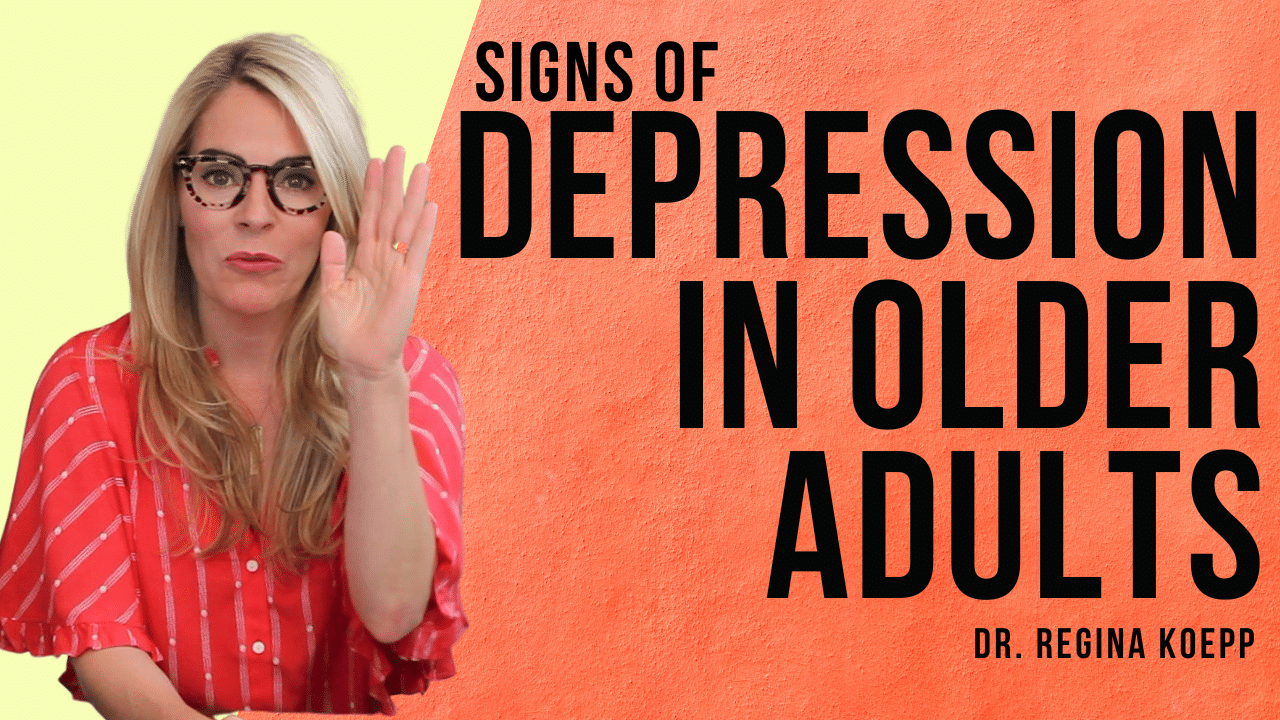
Caregivers have higher rates of stress and depression than non-caregivers. If you’re noticing signs of depression in your older caregiving parent, encourage them to reach out for mental health care. When mental health conditions go untreated in older adults. Learn more about the signs of depression here.
What happens if depression goes untreated in older adults?
Not only does treating depression in older adults alleviate suffering, we know that when depression goes untreated in older adults they:
-
- Have more medical problems
- Stay longer in the hospital
- Use more medication for their medical problems
- Have more visits to the ER
- Experience more loneliness and isolation
- Have an increased risk for suicide
This is where you come in! First you can begin to shift your view that with age comes depression, and secondly, you can help your older loved one get connected to providers and resources that can help treat suffering and ease pain.
Please don’t ignore these signs and symptoms. Instead lean in, share your concerns, and help your older loved one get connected to providers.
If you or someone you know is in crisis or struggling with thoughts about harming themselves or others, please reach out to the National Suicide Prevention Lifeline at +1 800-273-8255

Dr. Regina Koepp is a board certified clinical psychologist, clinical geropsychologist, and founder and CEO of the Center for Mental Health & Aging: the “go to” place for mental health and aging. Dr. Koepp is a sought after speaker on the topics of mental health and aging, caregiving, ageism, resilience, intimacy in the context of life altering Illness, and dementia and sexual expression. Dr. Koepp is on a mission to ensure mental health and belonging for older adults, because every person at every age is worthy of healing, transformation, and love. Learn more about Dr. Regina Koepp here.
Regina Koepp, PsyD, ABPP
























































































Want More? Read Our Most Recent Posts


Older adults deserve high quality mental health care.
Therapists deserve the training to provide that care.