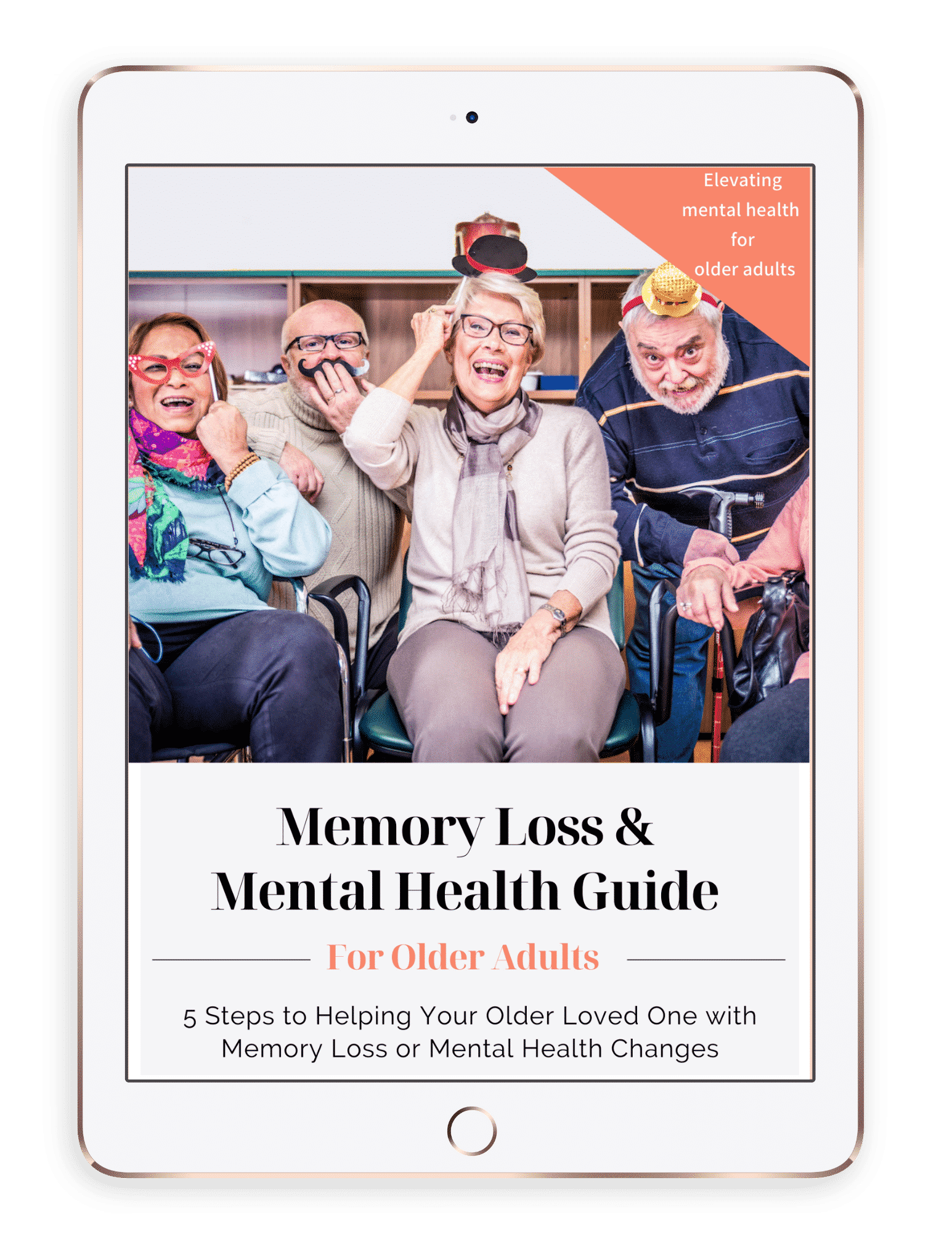
Depression is a medical condition that impacts more than 7 million adults over the age of 65. Depression can affect mental, physical, emotional and spiritual well-being.
Why is screening for depression in older adults important?
The earlier we can identify a depressive disorder and treat it, the less emotional AND physical suffering older adults will experience. Research shows that when depression goes untreated in older adults they:
- Have more medical problems
- Stay longer in the hospital
- Use more medication for their medical problems
- Have more visits to the ER
- Experience more loneliness and isolation
Detecting depression is important so that older adults with depression can be properly treated; screening is a first step to getting older adults connected to mental health care.
What is a screening tool in mental health care?
Screening tools help clinicians to evaluate for the possible presence of a mental health concern. For example: they simply tell us that a person is vulnerable to depression, they do not diagnose depression. They are typically questionnaires that identify an area of an older adult’s life that might need further, more comprehensive evaluation.
Screening tools can be helpful to use at the beginning of your work with a client to provide to get a baseline, and throughout treatment so that you can compare scores to the baseline to determine if the treatment is effective.
Which screening tools are used to assess depression in older adults?
There are several screening tools that are commonly used for assessing for depression in older adults. The Geriatric Depression Scale (GDS), the Patient Health Questionnaire (PHQ-9), the Depression in Old Age Scale (DIA-S), the Hospital Anxiety and Depression Scale (HADS), and for people with dementia, and the Cornell Scale for Depression in Dementia (CSDD).
The Geriatric Depression Scale (GDS) – A Depression Screening Tool for Older Adults
The Geriatric Depression Scale (GDS), first created by Yesavage, et al. in 1983 has been tested and used extensively with older adults. The GDS Long Form is a 30-item questionnaire in which participants are asked to respond by answering yes or no regarding how they have felt over the past week. Questions from the GDS-30, which had the highest correlation with depressive symptoms in validation studies were selected for the short version. A Short Form GDS consisting of 15 questions was developed in 1986 and is commonly called the GDS-15. For example:
- Are you basically satisfied with your life?
- Are you afraid that something bad is going to happen to you?
- Do you prefer to stay at home, rather than going out and doing things?
The GDS-15 is easy to use with older adults with or without cognitive concerns. Since the questions are simple “yes or no” questions, I find it useful to use with people with cognitive disorders. It takes about 5 to 7 minutes to complete.
For the GDS-15, a score of 0 to 5 is normal. A score greater than 5 suggests depression, and the older adult should be referred to a mental health provider for a more comprehensive assessment of depression.
The GDS-15 is my “go to” screener recommendation in outpatient primary care and outpatient mental health care settings.
The GDS-15 is available in many different languages from Arabic to Vietnamese. Learn more and download the GDS-15 here.
Patient Health Questionnaire (PHQ-9)
It’s also important to note that the PHQ-9, which many medical and mental health providers use to screen for depression, is also okay to use with older adults. The PHQ-9 uses a likert scale (“not at all” to “nearly every day”) to rate how frequently a person has been experiencing symptoms. Because of this, I do NOT recommend using the PHQ-9 with adults with cognitive disorders or dementia, rather the GDS-15 (above), or the Cornell Scale for Depression in Dementia (CSDD) are best to use for mild to moderate and severe dementia. Grab your copy of the PHQ-9 here.
Depression in Old Age Scale (DIA-S)- A Depression Screening Tool for Medically Ill or Medically Hospitalized Older Adults
The Depression in Old Age Scale (DIA-S) is a new screening tool for depression in older adults, was designed for use with medically ill or medically hospitalized older adults. This screening tool consists of ten short statements about depression with a simple yes/no answer format. For example:
- I am feeling down.
- I can enjoy my life, even when things are sometimes more difficult.
- I tend to worry a lot.
For the DIA-S, a score of 0 to 2 is normal. A score greater than 3 suggests depression, and the older adult should be referred to a mental health provider for a more comprehensive assessment of depression. Learn more about the DIA-S here
Hospital Anxiety and Depression Scale (HADS)
The Hospital Anxiety and Depression Scale (HADS), which was created in 1983 by Zigmond and Snaith to measure anxiety and depression with people who are medically hospitalized. It has since become a popular tool for screening for anxiety and depression within medical inpatient populations. You can learn more here.
Cornell Scale for Depression in Dementia (CSDD) – A Depression Screening Tool for Adults with Moderate to Severe Dementia
Cornell Scale for Depression in Dementia (CSDD) is a 19-item screening tool for detecting depression in adults with moderate to severe dementia. This assessment tool takes about 30 minutes and is administered in two steps:
- The clinician first interviews the resident’s caregiver on each of the 19 items of the scale based on their observations of the person with dementia’s behavior during the past week.
- The clinician briefly interviews the person with dementia
The screening assessment is broken up into categories, including:
- Mood-related signs like sadness, anxiety, irritability
- Behavioral disturbance like restlessness or stillness
- Physical signs like loss of appetite, loss of energy, etc.
- Cyclical functions like changes in sleep and wake times
- Ideational disturbance, meaning disturbance in thinking like suicidal thoughts, low self-esteem, increased delusions.
Learn more about the Cornell Scale for Depression in Dementia (CSDD) here.
How to Refer Older Adults for a Depression Evaluation?
DO NOT ignore signs and symptoms of mental health concerns. It can help to remember that mental health conditions are highly treatable in older adults. So, lean in, share your concerns, and help older adults who may be experiencing depression get connected to providers. Here’s how:
- Talk with the older adult about what you’ve been noticing in a straightforward, yet compassionate and concerned way. Here are some ideas:
- I’ve been noticing that you haven’t been yourself lately. You seem to be staying in bed a lot and more down than usual. I’m concerned about you.
- I’ve been worried about you. Can we talk about what you are experiencing? If not, who are you comfortable talking to?
- It seems like you are going through a difficult time. How can I help you to find help?
- Encourage them to see their primary care provider to rule out any medical concerns that may be causing these symptoms. If you’re a family member or friend, offer to accompany them to the appointment.
- Help them get connected with a mental health provider who specializes with older adults. Find a mental health provider who specializes with older adults here.
If you or someone you know is in crisis or struggling with thoughts about harming yourself or others, please reach out to the National Suicide Prevention Lifeline at +1 800-273-8255 or simply by calling 988.
Are you a professional looking to enhance your work with older adults? Check out our Online Continuing Education courses. Older adult or family member looking for mental health providers? Visit our directory of mental health professionals and find a provider today.

Dr. Regina Koepp is a board certified clinical psychologist, clinical geropsychologist, and founder and CEO of the Center for Mental Health & Aging: the “go to” place for mental health and aging. Dr. Koepp is a sought after speaker on the topics of mental health and aging, caregiving, ageism, resilience, intimacy in the context of life altering Illness, and dementia and sexual expression. Dr. Koepp is on a mission to ensure mental health and belonging for older adults, because every person at every age is worthy of healing, transformation, and love. Learn more about Dr. Regina Koepp here.
Regina Koepp, PsyD, ABPP




















































































Want More? Read Our Most Recent Posts


Older adults deserve high quality mental health care.
Therapists deserve the training to provide that care.