Have you helped your loved one move to a senior living or assisted living community only to find that in the midst of experiencing relief that your loved one is being cared for and is safe, you also have intense feelings of guilt and shame?
You’re not alone. Many caregivers struggle with guilt and shame after moving older loved ones into a senior living community. Perhaps you feel that you’ve let your older loved one down, like you’re not being a dutiful spouse, daughter, or son. This can lead to emotional distress and discontent.
To help you navigate the emotionally turbulent waters of caregiver guilt and shame, I’ve prepared 5 strategies for helping you to move through guilt and shame when helping your older loved one adjust to senior living.
5 strategies for moving through guilt and shame when helping your older loved one adjust to senior living
1. Be clear about your boundaries and share these boundaries with others.
Identify what your boundaries are. Are there certain caregiving tasks that you do not want to do, or cannot do? Taking time to get clear about your boundaries when it comes to caregiving will help you to identify what sorts of supports you will need to have in place to help your loved one, so all of the tasks do not fall to you.
For example:
- I can help my dad with doctor’s appointments, but he cannot live with me
- I can help my mom with bathing, but I can’t prepare meals
- I can take mom to the doctor, but I can’t manage her finances.
Now that you’re clear about what you can and cannot do as it relates to caregiving, share your boundaries with others involved in your older loved one’s care, like your partner, siblings, health providers, and doctors.
2. Be a friend to yourself
When you’re noticing that you’re being hard on yourself, like “I’m a bad daughter for moving my aging parent into a senior living community and not being here for them and the way that I imagined I would be” or the way that my parent imagined I would be. Be a friend to yourself. Respond to yourself when you’re having that thought, like you would respond to a friend.
For example: This is a really tough situation. I’m so sorry that you’re going through this what a dilemma. What a difficult decision that you have to make. I mean, either direction, it’s going to be hard. I’m here for you.
3. Know that you’re not alone
Other people in this situation who are moving or older loved one into an assisted living community, often have similarly intense feelings of guilt and shame. It may give you a little comfort to know that you are not alone. At some point in almost every caregiver’s journey, caregivers feel that they have disappointed their loved one or let them down in some way.
4. Focus on positive aspects of your relationship and your contributions to your loved one’s care
Guilt and shame are really good at are getting us to focus on negative aspects of ourselves. It can help to counter this with focusing on positive ways that you’re contributing to your loved one’s care or the relationship. For example:
- I call my older loved one every day, or I do a window visit or an outdoor visit with my loved one once a week.
- I call the senior living community daily to get an update on my loved one.
- I was able to take my loved one to the doctor a few times last week, and then we went to lunch. And that was lovely.
Find ways that you are contributing in a positive way and focus on those. Don’t let the guilt and shame have the last word.
5. Practice mindfulness
Mindfulness is essentially holding in your mind’s eye your thoughts and feelings. After you finish a visit with your older loved one, take a few minutes to reflect on what thoughts and feelings are arising for you.
For example: After I leave a visit with my dad in his senior living community, I feel so sad. And then that sadness, jumps to feeling like “I’m a bad daughter”, like I shouldn’t have made this decision.
Taking the time to mindfully recognize your thoughts and feelings and hold space for them, free of judgment, will help you to more compassionately process these intense feelings.

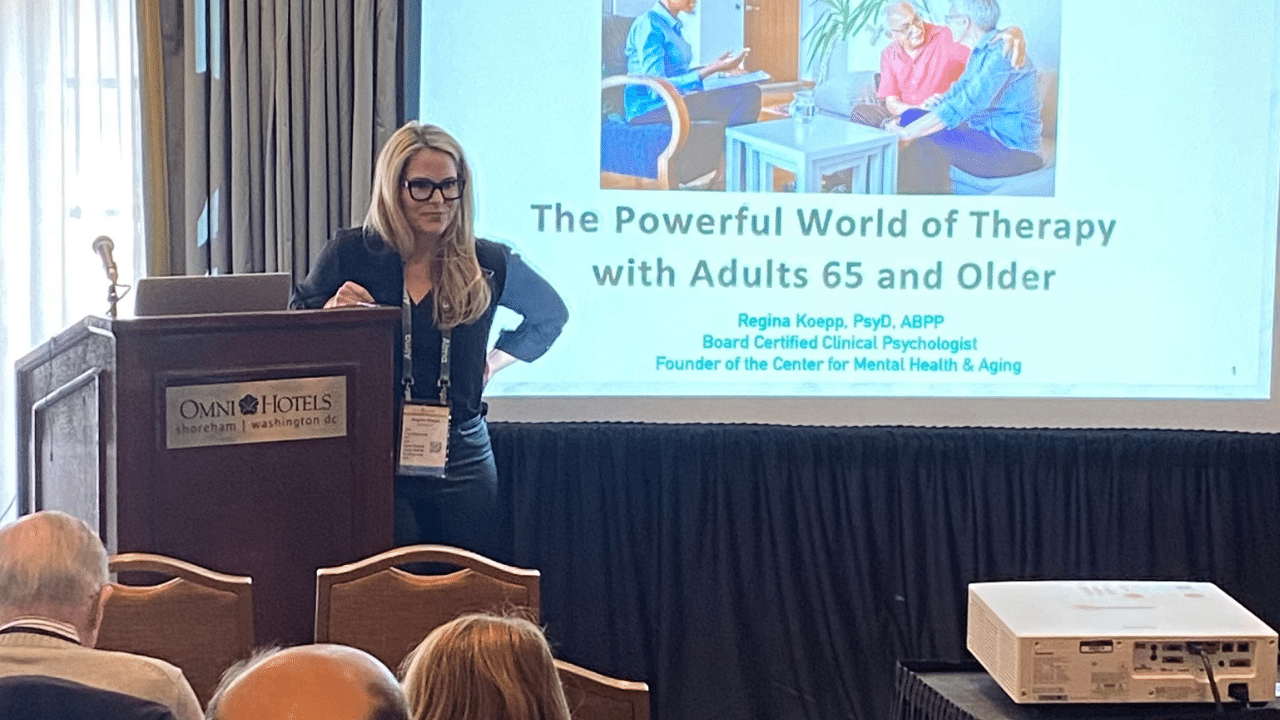
Dr. Regina Koepp is a board certified clinical psychologist, clinical geropsychologist, and founder and CEO of the Center for Mental Health & Aging: the “go to” place for mental health and aging. Dr. Koepp is a sought after speaker on the topics of mental health and aging, caregiving, ageism, resilience, intimacy in the context of life altering Illness, and dementia and sexual expression. Dr. Koepp is on a mission to ensure mental health and belonging for older adults, because every person at every age is worthy of healing, transformation, and love. Learn more about Dr. Regina Koepp here.
Regina Koepp, PsyD, ABPP






















































































Want More? Read Our Most Recent Posts


Older adults deserve high quality mental health care.
Therapists deserve the training to provide that care.