Assisted living and long-term care communities have a duty to ensure that residents’ rights of sexual autonomy and self-determination are honored and equally have a duty to protect residents from harm.
A sexual health policy helps to ensure that both standards are being met.
What is a sexual health policy?
A sexual health policy is a statement of values AND a set of guidelines to inform the staff and resident culture in long-term care communities that includes a resident’s rights related to sexual expression and intimacy.
It may include values such as, “we value each resident’s right to sexual self-expression and understand that it is quite common and healthy for residents to form intimate relationships. We do not pass judgment nor discriminate based on gender, gender identity, sexual orientation, race, ethnicity, ability, class, and other social identities”
For many long-term care communities, if they do have a sexual health policy, they may discuss a resident’s rights, but may not include the other critical piece of the sexual health policy which is a set of guidelines for navigating ethical and clinical dilemmas as they arise.
The question of can a resident with dementia consent to intimacy with a loved one or a resident is often one of primary concern related to intimacy in the context of dementia. A sexual health policy should include guidelines with how the assisted living community responds to questions surrounding capacity, unwanted bids for intimacy, etc.
Why does every assisted living community need a sexual health policy?
A thoughtfully crafted sexual health policy ensures that proper steps will be taken to meet a resident’s needs. It protects a resident’s needs and wishes even when there are strong immediate and knee-jerk reactions from staff and family members.
Furthermore, a sexual health policy not only conveys a long-term care community’s commitment to the whole person, but also demonstrates how they honor their resident’s sexual autonomy and rights while at the same time illustrating how they protect residents from harm.
How does a sexual health policy benefit residents, staff, families, and administrators?
For Residents:
A sexual health policy helps to enhance the wellbeing of residents in a holistic approach, in which social, emotional, spiritual, physical, and sexual needs are respected and valued.
For Families:
A sexual health policy gives family members or legal guardians a clear understanding about the potential for intimate relationships and the facility’s guidelines or policies on such matters. This helps to lay a foundation and start conversations about a resident’s rights and the family member’s role ahead of time and
For staff:
A sexual health policy helps staff members to feel effective in addressing the intimacy and sexuality needs of residents. With proper training to accompany a sexual health policy, staff will be better able to use practical strategies for dealing with specific situations/
For administrators:
A sexual health policy provides administration of a facility an established guidelines or policies and procedures for resolving dilemmas involving sexually intimate relationships between residents.
Where to learn more about dementia and sexual health?
Our dementia and sexual health certification course is the only program of its kind to provide in depth, comprehensive training to give you all the tools you need to honor the sexual identity and autonomy of people with dementia AND ensure that there are methods in place to identify when an intimate interaction may be causing harm. Learn more here.


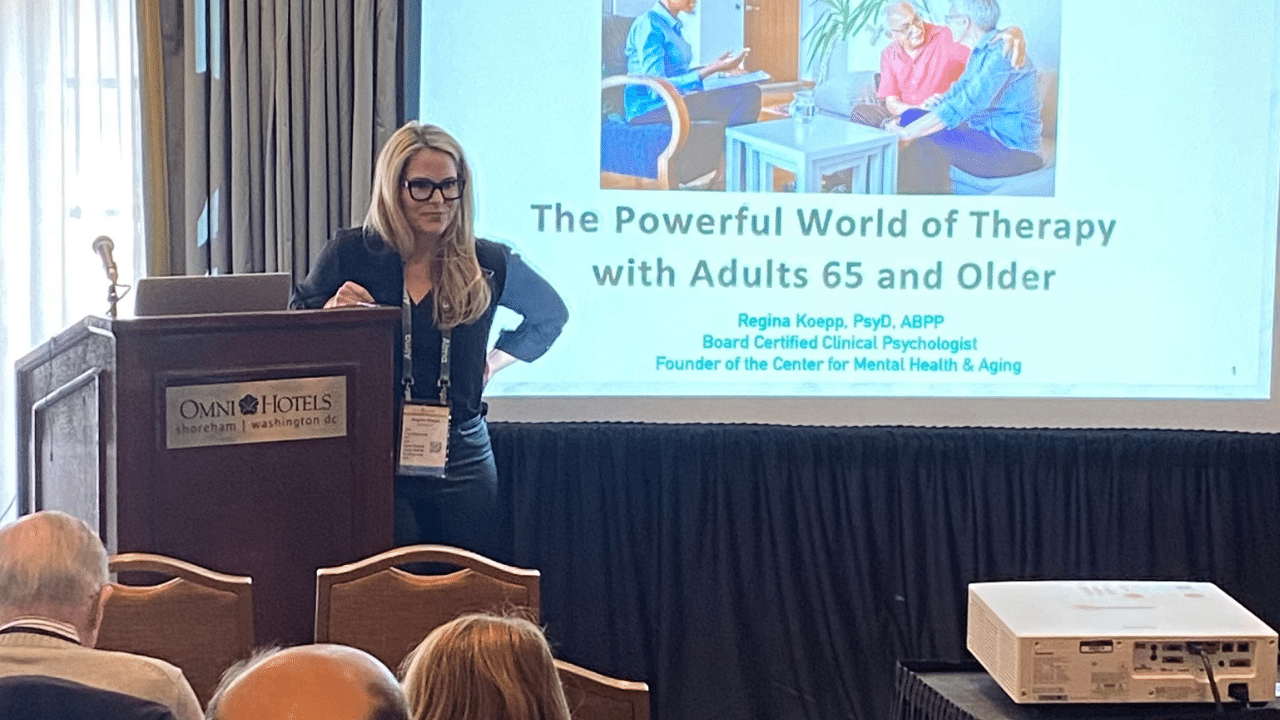
Dr. Regina Koepp is a board certified clinical psychologist, clinical geropsychologist, and founder and CEO of the Center for Mental Health & Aging: the “go to” place for mental health and aging. Dr. Koepp is a sought after speaker on the topics of mental health and aging, caregiving, ageism, resilience, intimacy in the context of life altering Illness, and dementia and sexual expression. Dr. Koepp is on a mission to ensure mental health and belonging for older adults, because every person at every age is worthy of healing, transformation, and love. Learn more about Dr. Regina Koepp here.
Regina Koepp, PsyD, ABPP


























































































Want More? Read Our Most Recent Posts


Older adults deserve high quality mental health care.
Therapists deserve the training to provide that care.