
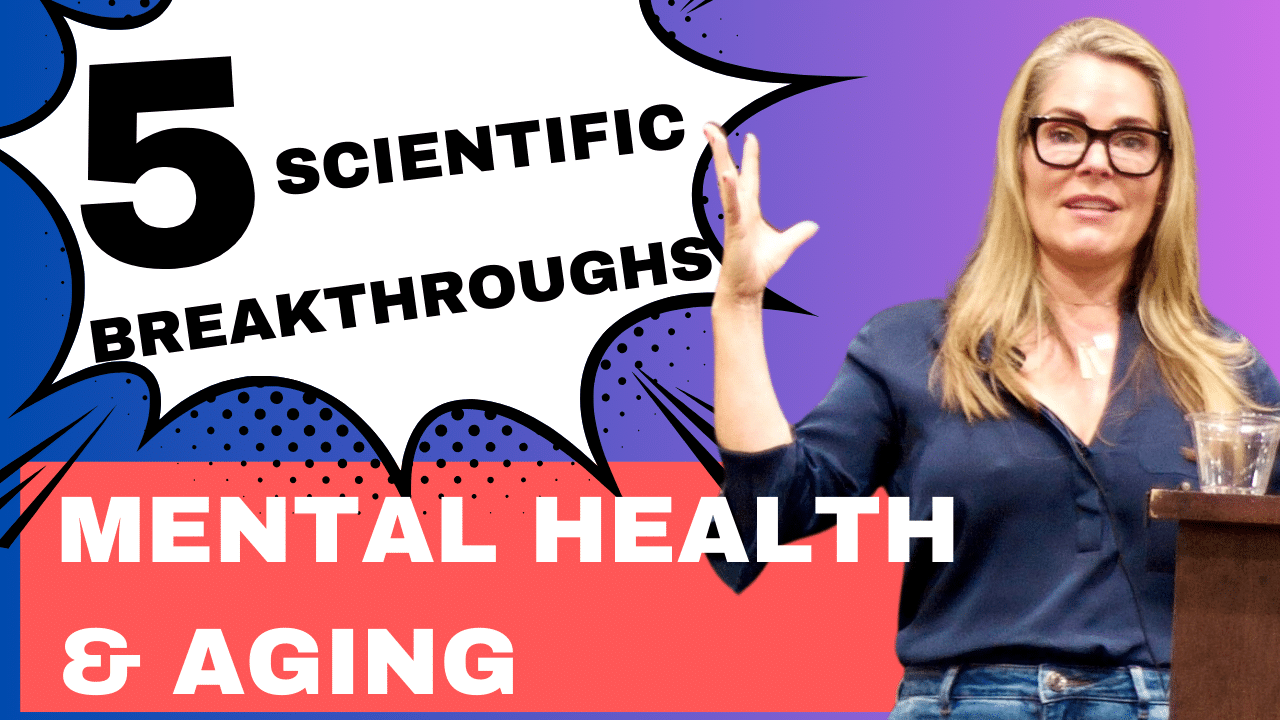
If you’re committed to meeting the mental health needs of older adults, this episode is for you.
In 2024, we saw some incredible advancements in mental health research for older adults—insights that can shape how you practice and care for this underserved population.
As a geropsychologist, I’m passionate about equipping you with the tools you need to make a difference. Let’s dive into 5 discoveries from 2024 that you absolutely need to know.
Here’s What You’ll Learn in This Episode:
- 14 Evidence-Based Ways to Prevent or Delay Dementia
Did you know there are now 14 modifiable risk factors for dementia? The Lancet Commission has added hearing loss, air pollution, and sleep to the list. By addressing these, we could prevent up to 45% of dementia cases. Imagine the difference you could make by sharing this information with your clients and communities. Tune in to learn how to integrate these findings into your work. - A Breakthrough in Preventing Cognitive Decline in Older Adults with a History of Depression
Depression in older adults can be particularly complex, but 2024 brought hope with innovative treatments like cognitive remediation therapy and transcranial direct current stimulation (TDCS). These therapies not only improve mood but also help preserve cognitive function. Curious about how they work and how you can use them in practice? Listen to the episode for all the details. - Loneliness Significantly Increases Dementia Risk by 31%: A large-scale analysis by the National Institute on Aging found that loneliness increases the risk of developing dementia by 14% for Alzheimer’s disease and 17% for vascular dementia (these added together = 31%), and cognitive impairment by 12%. Recognizing and addressing loneliness is crucial for cognitive health.Learn how in this episode.
- Anxiety: A Hidden Risk Factor for Dementia
Anxiety is often overlooked in older adults, but the Hunter Community Study revealed a startling link: untreated anxiety significantly increases the risk of dementia. Addressing anxiety early isn’t just helpful—it’s critical. Learn why this connection matters and how to support older adults in reducing their risk when you listen to the episode. - ADHD in Older Adults Can Look Different than in Younger Adults
ADHD doesn’t just “go away” with age, and many older adults are navigating its challenges without a diagnosis. Recognizing ADHD in later life can transform how we support older adults who’ve struggled silently for decades. Want to know how to identify and address ADHD in this population? Don’t miss this episode.
Resources Mentioned:
- Free Guide: Clinician’s Guide to Mental Health and Aging
- CEU Programs: Explore Continuing Education Courses
- Loneliness & Isolation Screening Tools for Professionals
- Article on Social Prescribing
- NPR clip on Korea Town Senior Center in Los Angeles
Articles Referenced:
- Lancet Commission on Dementia Prevention
- Livingston, G., Huntley, J., Liu, K. Y., Costafreda, S. G., Selbæk, G., Alladi, S., Ames, D., Banerjee, S., Burns, A., Brayne, C., Fox, N. C., Ferri, C. P., Gitlin, L. N., Howard, R., Kales, H. C., Kivimäki, M., Larson, E. B., Nakasujja, N., Rockwood, K., Samus, Q., … Mukadam, N. (2024). Dementia prevention, intervention, and care: 2024 report of the Lancet standing Commission. Lancet (London, England), 404(10452), 572–628. https://doi.org/10.1016/S0140-6736(24)01296-0
- JAMA Psychiatry on TDCS and Depression Treatment
- Rajji TKBowie CRHerrmann N, et al. Slowing Cognitive Decline in Major Depressive Disorder and Mild Cognitive Impairment: A Randomized Clinical Trial. JAMA Psychiatry. 2025;82(1):12–21. doi:10.1001/jamapsychiatry.2024.3241
- Feeling lonely increases the risk for dementia by 31% – Florida State Research Funded by NIA
- Luchetti, M., Aschwanden, D., Sesker, A.A. et al. A meta-analysis of loneliness and risk of dementia using longitudinal data from >600,000 individuals. Nat. Mental Health 2, 1350–1361 (2024). https://doi.org/10.1038/s44220-024-00328-9
- Hunter Community Study on Anxiety and Dementia Risk
- Khaing, K., Dolja-Gore, X., Nair, B. R., Byles, J., & Attia, J. (2024). The effect of anxiety on all-cause dementia: A longitudinal analysis from the Hunter Community Study. Journal of the American Geriatrics Society, 72(11), 3327–3334. https://doi.org/10.1111/jgs.19078
- Meta-Analysis of ADHD in Older Adults
- Fischer, S., & Nilsen, C. (2024). ADHD in older adults – a scoping review. Aging & Mental Health, 28(9), 1189–1196. https://doi.org/10.1080/13607863.2024.2339994
If you enjoyed this episode, please subscribe, leave a review, and share it with a colleague or friend. Together, we can ensure older adults are included in the mental health conversation.
PROFESSIONALS: Grab your free guide to working with older adults here

Dr. Regina Koepp is a board certified clinical psychologist, clinical geropsychologist, and founder and CEO of the Center for Mental Health & Aging: the “go to” place for mental health and aging. Dr. Koepp is a sought after speaker on the topics of mental health and aging, caregiving, ageism, resilience, intimacy in the context of life altering Illness, and dementia and sexual expression. Dr. Koepp is on a mission to ensure mental health and belonging for older adults, because every person at every age is worthy of healing, transformation, and love. Learn more about Dr. Regina Koepp here.
Regina Koepp, PsyD, ABPP







































































Want More? Listen to Our Most Recent Episodes


Older adults deserve high quality mental health care.
Therapists deserve the training to provide that care.
