

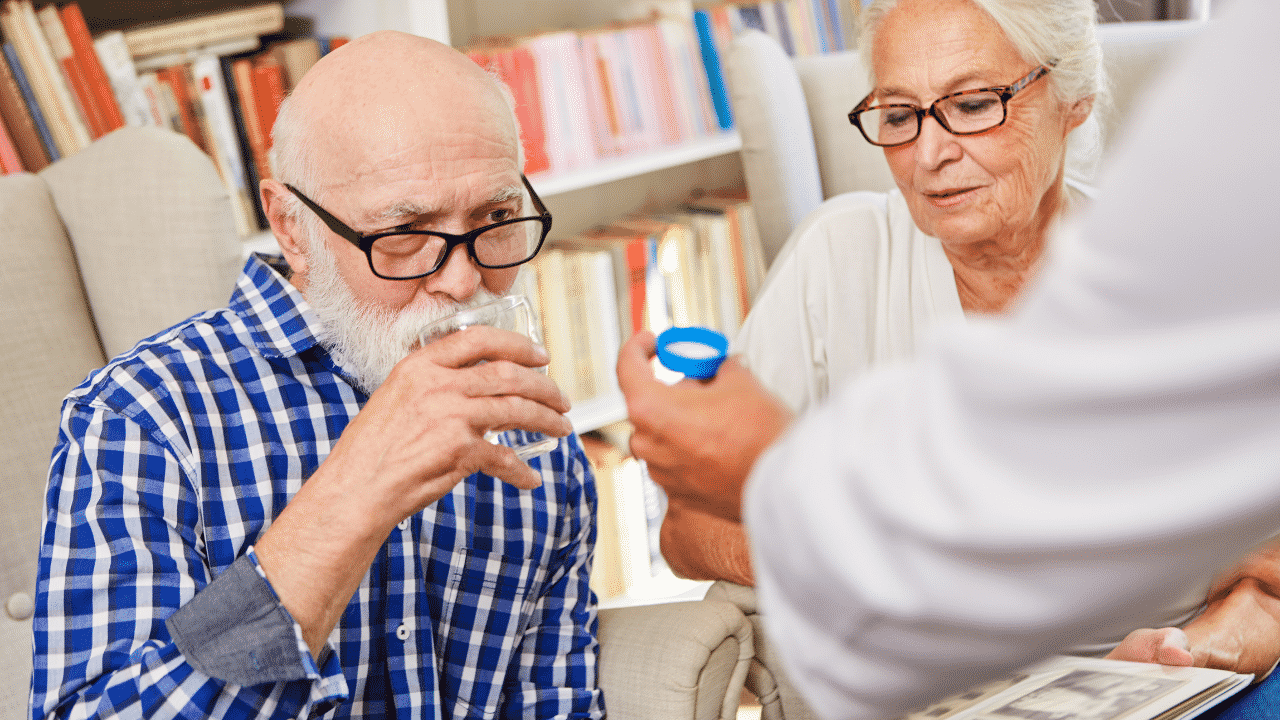
Does moderate drinking increase dementia risk? Here’s what the science says—and what you can do to support brain health in later life.
If you’ve ever been told that “a little wine is good for you,” you might want to hear what the latest science says—especially when it comes to the aging brain.
In this episode, I share compelling new research showing that even moderate alcohol use in midlife and later life may significantly increase the risk of dementia. I’ll walk you through why alcohol use in older adults often goes undetected, how it impacts brain health, and the exact screening tools and questions I use—and that you can use too—to spot red flags early.
This isn’t about scare tactics. It’s about equipping you with the facts, the tools, and the confidence to support safer, healthier aging. Whether you’re a therapist, care manager, or simply someone who wants to protect your own brain health, you’ll come away knowing why there may be no safe level of alcohol when it comes to dementia prevention.
What You’ll Learn in This Episode:
- The brain changes alcohol accelerates—from memory loss to neurotransmitter disruption.
- Why “invisible” alcohol misuse often goes undetected in later life—and how I approach spotting it.
- Three screening tools to use with older adults
- The good news: Older adults can recover—and often have better treatment outcomes than younger adults when care is tailored to them.
Remember…
It’s only with your help that we can meet the mental health needs of older adults. So thank you for being here—and thank you for doing your part.
Resources Mentioned
- 3 Alcohol Use Screening Tools to Use with Older Adults:
Related Resources
- Aging and Alcohol: How to Identify Problem Drinking in Older Adults
- Facts About Aging and Alcohol: Signs of Alcohol Abuse in Older Adults & How to Help
Professionals:
Learn to adapt your practice for older adults and join me for my 90-min CE course on August 21, 2025

Subscribe and Leave a Review
If you enjoyed this episode, please subscribe, leave a review, and share it with a colleague or friend. Together, we’re building a movement for mental health and aging. Because there is no expiration date on healing, transformation, and growth.
References
- Koch, M., Fitzpatrick, A. L., Rapp, S. R., et al. (2019). Alcohol consumption and risk of dementia and cognitive decline among older adults with or without mild cognitive impairment. JAMA Network Open, 2(9), e1910319.
- Livingston, G., Huntley, J., Liu, K. Y., Costafreda, S. G., Selbæk, G., Alladi, S., et al. (2024). Dementia prevention, intervention, and care: 2024 report of the Lancet standing Commission. The Lancet, 404(10452), 572–628. https://doi.org/10.1016/S0140-6736(24)01042-3
- Zheng L. et al. (2024). Association between alcohol consumption and incidence of dementia in current drinkers: linear and non-linear Mendelian randomization analysis. eClinicalMedicine.

Dr. Regina Koepp is a board certified clinical psychologist, clinical geropsychologist, and founder and CEO of the Center for Mental Health & Aging: the “go to” place for mental health and aging. Dr. Koepp is a sought after speaker on the topics of mental health and aging, caregiving, ageism, resilience, intimacy in the context of life altering Illness, and dementia and sexual expression. Dr. Koepp is on a mission to ensure mental health and belonging for older adults, because every person at every age is worthy of healing, transformation, and love. Learn more about Dr. Regina Koepp here.
Regina Koepp, PsyD, ABPP


































Want More? Listen to Our Most Recent Episodes


Older adults deserve high quality mental health care.
Therapists deserve the training to provide that care.
