

The Hidden Link Between Depression and Dementia
Every time I sit with a client and help them move through depression, I know I’m not just helping them feel better in the moment—I may also be protecting their brain years down the road. That’s not just a hope—it’s science.
In this episode, I’m diving into the powerful link between mental health treatment and dementia prevention. So many therapists don’t realize that untreated depression in midlife and later life increases the risk of dementia. But here’s the hopeful truth: when we treat depression, we don’t just reduce suffering—we may delay or even prevent cognitive decline.
If you’re a therapist, this episode is a call to action. You have more power than you think to shape not just your client’s emotional well-being, but their cognitive future. I’ll walk you through the research, the biology, and—most importantly—what you can do right now to support your older clients in living full, vibrant, and connected lives.
In This Episode, You’ll Learn:
-
Why depression is a modifiable risk factor for dementia
-
What the latest research says about treating depression and reducing dementia risk
-
How therapy for depression improves mood, memory, and independence
-
Why older adults are just as likely to benefit from therapy as other age groups
-
How antidepressant treatment in people with mild cognitive impairment can delay dementia
-
What you can do for clients already living with dementia and depression
-
Why your role as a therapist matters more than ever—and how to make a difference
How You Can Bring This Into Your Practice
Here are 5 ways you can start making an impact—today:
1. Use the Right Screening Tools for Older Adults
Start by using depression screeners that are normed for older adults. I often use the Geriatric Depression Scale-15, especially with people living with mild cognitive impairment. Here’s a link to an episode I did on my top 5 depression screening tools below.
2. Know the Connection Between Mental Health Conditions and Dementia Disorders
Understanding how mental health conditions like depression, anxiety, trauma, and sleep disorders affect brain health is essential. Today, we focus on depression—but in upcoming episodes, I’ll walk you through the others.
3. Treat Depression Among Older Adults
Therapy works. And when you provide psychotherapy to treat depression, you’re not only helping today—you may be protecting your client’s future memory and independence. And, yes! Older adults benefit from therapy.
4. Collaborate With Medical Providers
If you’re seeing signs of cognitive change, it’s critical that you refer your client to their primary care provider to rule out medical causes like B12 deficiency, UTIs, medication interactions, or something else. We do our best work when we work as a team.
5. Educate and Empower
Let’s flip the script on ageist myths. Depression is not a normal part of aging. And older adults are not “too old to change.” Let’s help families and colleagues see the truth—and the possibilities.
Remember…
It’s only with your help that we can meet the mental health needs of older adults. So thank you for being here—and thank you for doing your part.
Resources Mentioned
-
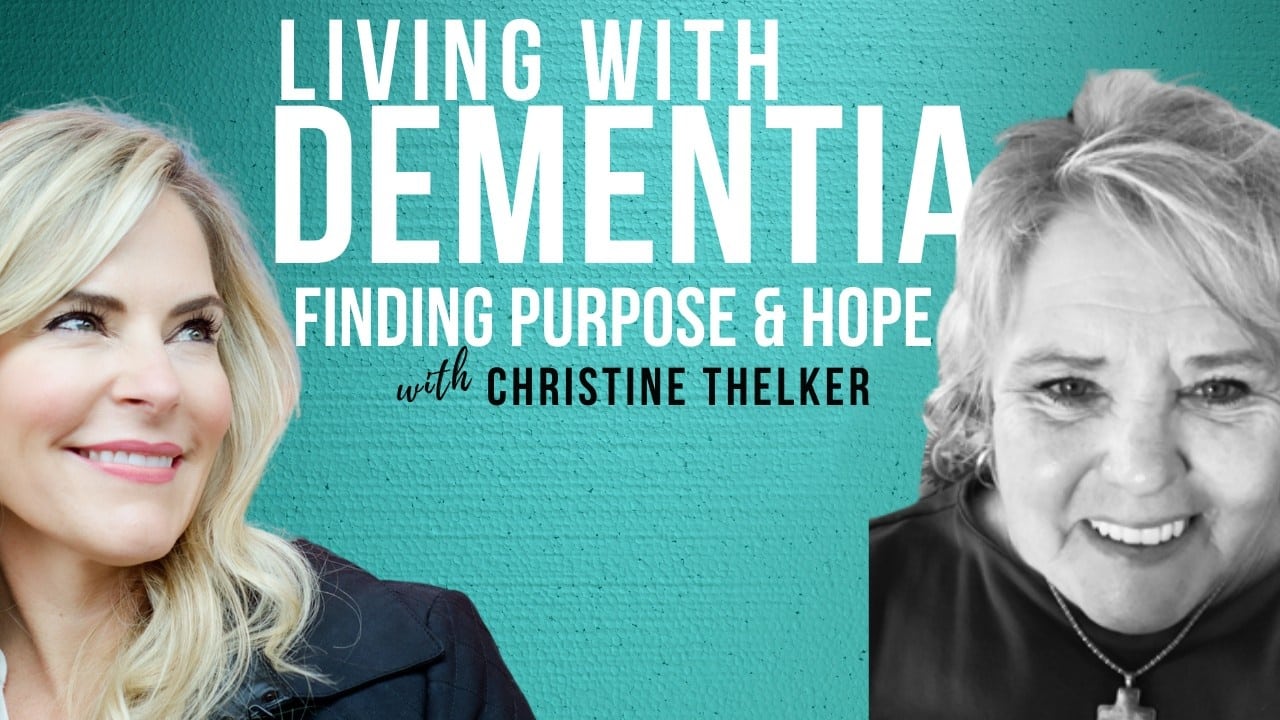
Interview with Chrissy Thelker describing her experience living with dementia
-
Depression Screening Tools (including a tool to screen for depression in the context of dementia)
Professionals:
Learn to adapt your practice for older adults and join me for my 90-min CE course on August 21, 2025

Subscribe and Leave a Review
If you enjoyed this episode, please subscribe, leave a review, and share it with a colleague or friend. Together, we’re building a movement for mental health and aging. Because there is no expiration date on healing, transformation, and growth.
References
- Arce, L., Ardila, A., Caicedo-Posso, D., Molina-Perea, K. N., & Lozada-Martinez, I. (2022). Later life depression as a risk factor for developing dementia: How much influence does the post-pandemic era have? Egyptian Journal of Psychiatry, 43, 59–61.
- Aunsmo, R. H., Strand, B. H., Anstey, K. J., Bergh, S., Kivimäki, M., Köhler, S., Krokstad, S., Livingston, G., Matthews, F. E., & Selbæk, G. (2024). Associations between depression and anxiety in midlife and dementia more than 30 years later: The HUNT Study. Alzheimer’s & Dementia, 16(4), e70036. https://doi.org/10.1002/dad2.70036
- Aziz, R., & Steffens, D. C. (2013). What are the causes of late-life depression? The Psychiatric Clinics of North America, 36(4), 497–516. https://doi.org/10.1016/j.psc.2013.08.001
- Bartels, C., Wagner, M., Wolfsgruber, S., Ehrenreich, H., Schneider, A., & Alzheimer’s Disease Neuroimaging Initiative. (2018). Impact of SSRI therapy on risk of conversion from mild cognitive impairment to Alzheimer’s dementia in individuals with previous depression. The American Journal of Psychiatry, 175(3), 232–241. https://doi.org/10.1176/appi.ajp.2017.17040404
- Fang, Y. Y., Zeng, P., Qu, N., Ning, L. N., Chu, J., Zhang, T., Zhou, X. W., & Tian, Q. (2018). Evidence of altered depression and dementia-related proteins in the brains of young rats after ovariectomy. Journal of Neurochemistry, 146(6), 703–721. https://doi.org/10.1111/jnc.14537
- García-Martín, V., de Hoyos-Alonso, M. C., Ariza-Cardiel, G., et al. (2022). Neuropsychiatric symptoms and subsyndromes in patients with different stages of dementia in primary care follow-up (NeDEM project): A cross-sectional study. BMC Geriatrics, 22, 71. https://doi.org/10.1186/s12877-022-02762-9
- Kuring, J. K., Mathias, J. L., & Ward, L. (2018). Prevalence of depression, anxiety and PTSD in people with dementia: A systematic review and meta-analysis. Neuropsychology Review, 28(4), 393–416. https://doi.org/10.1007/s11065-018-9396-2
- Livingston, G., Huntley, J., Liu, K. Y., Costafreda, S. G., Selbæk, G., Alladi, S., et al. (2024). Dementia prevention, intervention, and care: 2024 report of the Lancet standing Commission. The Lancet, 404(10452), 572–628. https://doi.org/10.1016/S0140-6736(24)01042-3
- Ramirez, J. L., Drudi, L. M., & Grenon, S. M. (2018). Review of biologic and behavioral risk factors linking depression and peripheral artery disease. Vascular Medicine, 23(5), 478–488. https://doi.org/10.1177/1358863X18773161

Dr. Regina Koepp is a board certified clinical psychologist, clinical geropsychologist, and founder and CEO of the Center for Mental Health & Aging: the “go to” place for mental health and aging. Dr. Koepp is a sought after speaker on the topics of mental health and aging, caregiving, ageism, resilience, intimacy in the context of life altering Illness, and dementia and sexual expression. Dr. Koepp is on a mission to ensure mental health and belonging for older adults, because every person at every age is worthy of healing, transformation, and love. Learn more about Dr. Regina Koepp here.
Regina Koepp, PsyD, ABPP





































































Want More? Listen to Our Most Recent Episodes


Older adults deserve high quality mental health care.
Therapists deserve the training to provide that care.
