
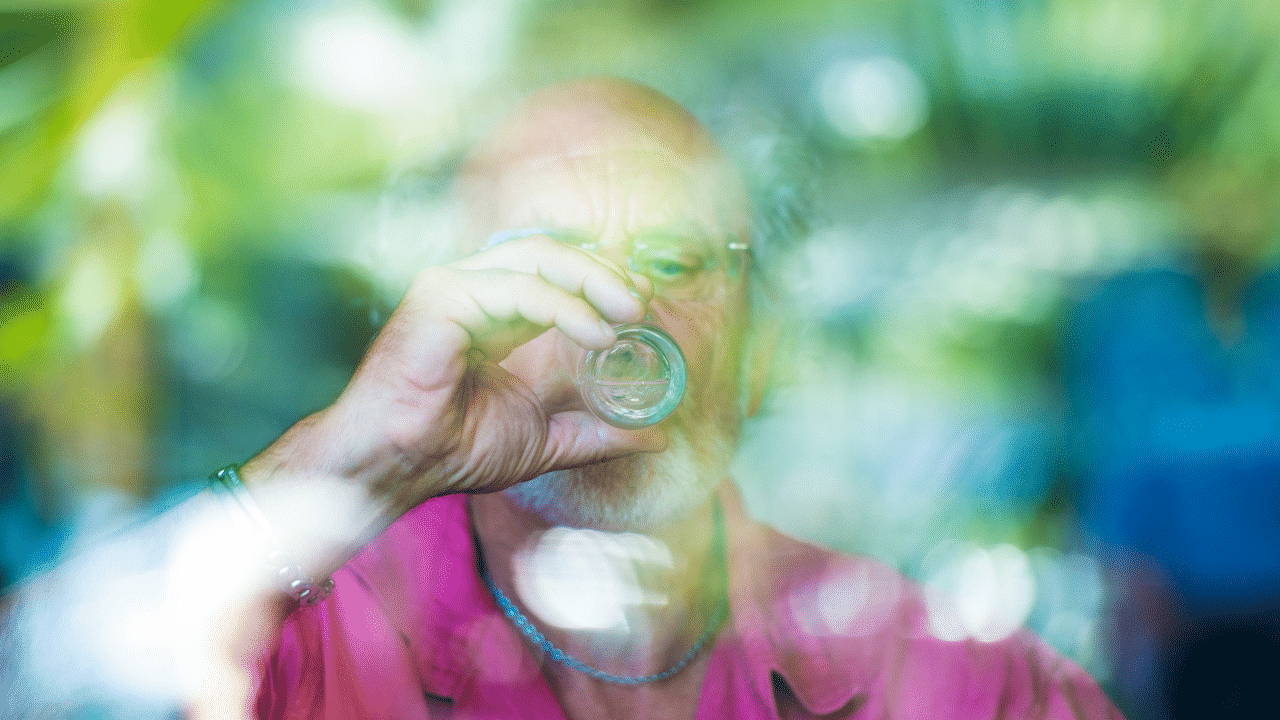
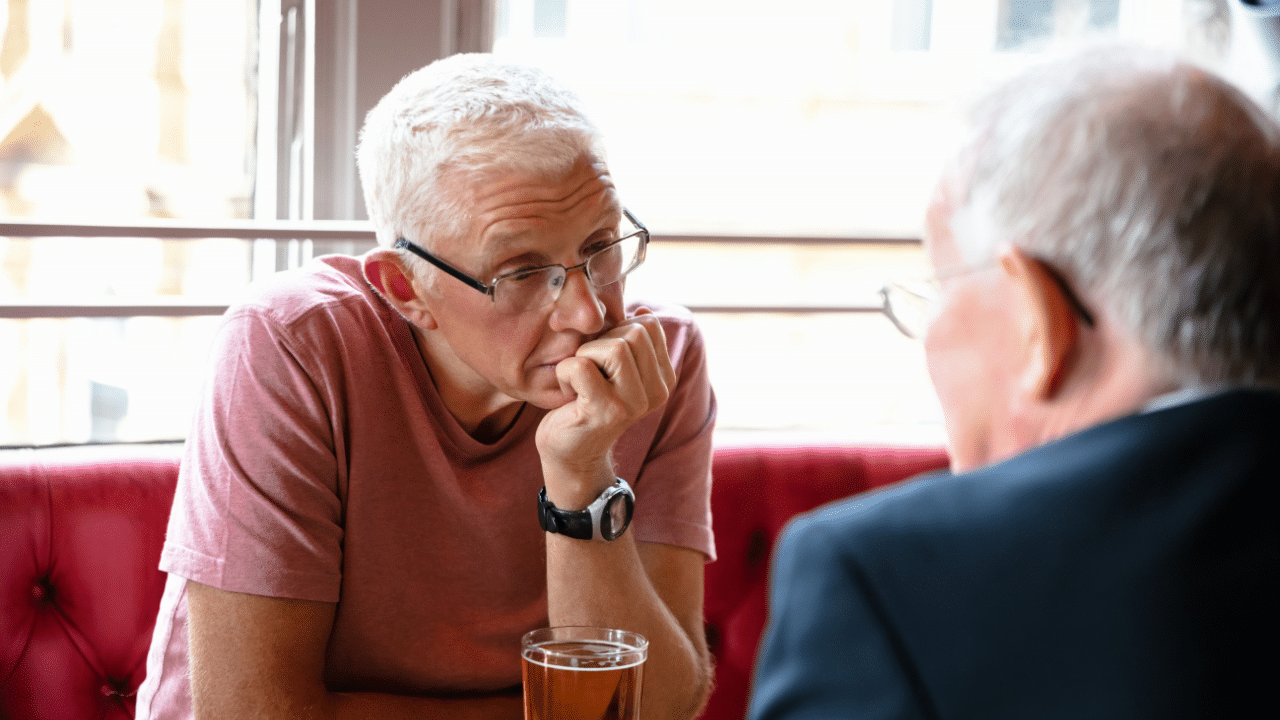
Many older adults decide to stop drinking as they get older (YAY!).
There’s an ageist idea circling around society, however, that suggests that “older adults can’t change”. This idea is not only false, it’s incredibly harmful to older adults who may just believe this erroneous statement and never get the help they need when it comes to substance use disorders and other mental health conditions.
Some researchers and mental health and aging groups talk about the invisibility of alcohol use among older adults, explaining that even though the number of older adults with alcohol problems is on the rise, alcohol use disorders are too often unrecognized and untreated. Some reasons for this have to do with symptoms of problematic drinking often masquerading as other health conditions in older adults like diabetes, dementia, and depression.
To complicate matters, many older adults don’t seek professional help for what they often consider a “private matter” and many family members and friends of older adults with alcohol problems at some point stop trying to convince their older loved one that the alcohol use can be treated.
Join me in making the invisible visible by learning the facts about aging and alcohol use and what you can do to help.
Here’s what you’ll learn:
- [02:15] The rates of alcohol use among older adults
- [04:30] 3 Reasons why talking about alcohol use in older adults is important
- [10:11] What may trigger older adults more vulnerable to begin using alcohol or use more alcohol than they used to?
- [13:28] The warning signs of alcohol use in older adults
- [16:36] 10 questions to consider if it might be time to talk with your doctor about cutting back on drinking
- [18:13] How much alcohol is safe for older adults? What are the guidelines from the National Institute on Alcohol Abuse and Alcoholism versus the recommendations from the Global Council on Brain Health?
- [20:41] Tips for stopping drinking or cutting back on drinking for older adults
- [23:21] Tips for helping an older loved one when you’re concerned about their drinking
Take a peek inside the episode:
For More Information About Alcohol Use
- Alcoholics Anonymous
- National Institute on Alcohol Abuse and Alcoholism
- Substance Abuse and Mental Health Services Administration at 877-726-4727 (toll-free)
For Families:
- Al-Anon is a support group for friends and family of people with a drinking problem. Find a meeting near you by calling 1-888-425-2666.
Podcast episodes mentioned:
References:
- Get Connected: Linking Older Adults with Resources on Medication, Alcohol, and Mental Health–2019 Edition
- https://www.nia.nih.gov/health/facts-about-aging-and-alcohol
- https://www.niaaa.nih.gov/alcohols-effects-health/special-populations-co-occurring-disorders/older-adults
- https://www.drugabuse.gov/publications/substance-use-in-older-adults-drugfacts
- https://www.nia.nih.gov/health/getting-help-alcohol-problems
- https://www.nia.nih.gov/health/how-help-someone-you-know-drinking-problem
- Grant BF, Chou SP, Saha TD, et al. Prevalence of 12‐month alcohol use, high‐risk drinking, and DSM‐IV alcohol use disorder in the United States, 2001‐2002 to 2012‐2013: Results from the National Epidemiologic Survey on Alcohol and Related Conditions. JAMA Psychiat. 2017; 74(9): 911‐923.
- Kuerbis et al. Substance abuse among older adults. Clin Geriatr Med. 2014 Aug; 30(3): 629–654. doi:10.1016/j.cger.2014.04.008
- White A, Castle I, Hingson R, Powell P. Using death certificates to explore changes in alcohol‐related mortality in the United States, 1999 to 2017. Alcoholism Clinical and Experimental Research. 2020 January 7; 44(1): 178-187. https://doi.org/10.1111/acer.14239

Dr. Regina Koepp is a board certified clinical psychologist, clinical geropsychologist, and founder and CEO of the Center for Mental Health & Aging: the “go to” place for mental health and aging. Dr. Koepp is a sought after speaker on the topics of mental health and aging, caregiving, ageism, resilience, intimacy in the context of life altering Illness, and dementia and sexual expression. Dr. Koepp is on a mission to ensure mental health and belonging for older adults, because every person at every age is worthy of healing, transformation, and love. Learn more about Dr. Regina Koepp here.
Regina Koepp, PsyD, ABPP

























Want More? Listen to Our Most Recent Episodes


Older adults deserve high quality mental health care.
Therapists deserve the training to provide that care.
