
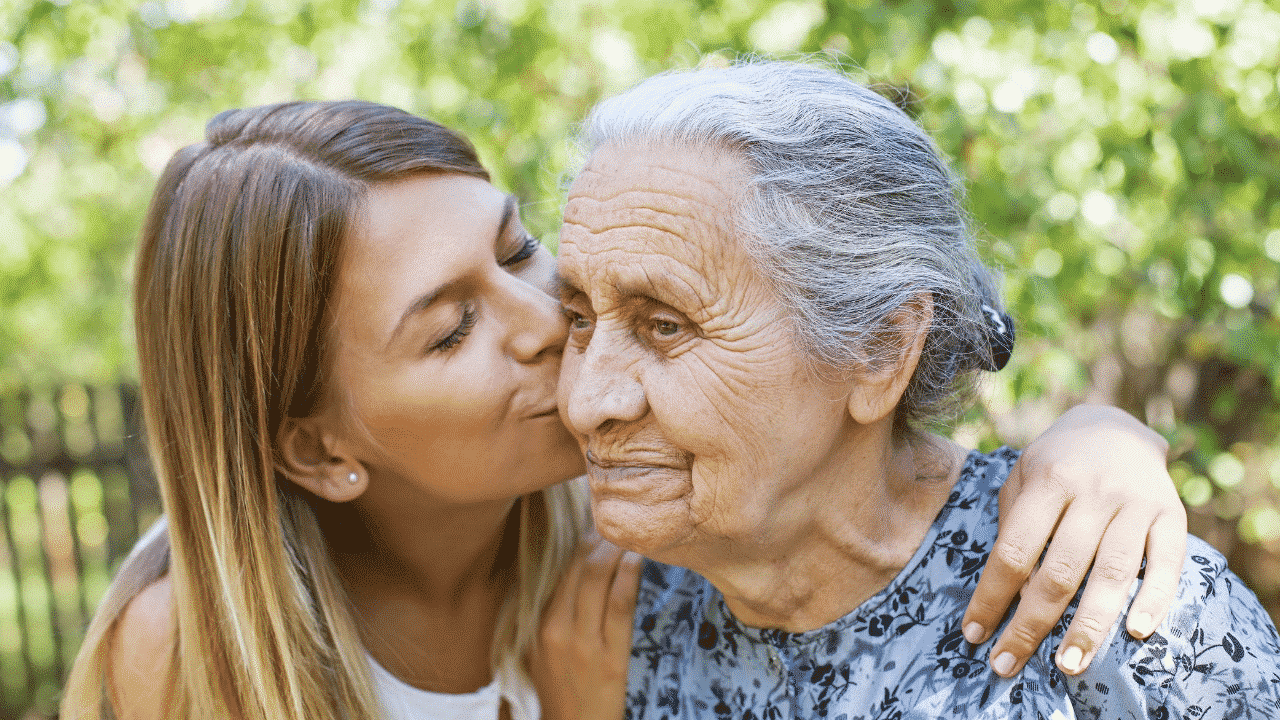
I hear from caregivers pretty regularly that”nobody really understands how hard caring for a loved one with dementia is!”
So, I decided to share some facts about dementia caregivers in the hopes that it will provide some understanding and support for the dementia caregiver’s journey!

If you’re caring for somebody with dementia, I see you and I value what you’re doing. Please, please, please take care of yourself because we know that depression and anxiety and stress and strain will not only affect your, your sense of self and well-being, it will affect your health.
At the end of this episode (and at the bottom of this page), I share some resources for self-care. So, read (or listen) until the end!
Here’s a peak inside the episode:
- [01:35] Fact #1: 48% of all caregivers (of any condition) provide care for a loved one with dementia.
- [02:13] Fact #2: The majority of people living with dementia live with a family member (not in an Assisted Living or Nursing Home). Hint: There’s a bonus fact about who are the ones providing care.
- [02:47] Fact #3: Dementia is the most expensive illness to care for. Find out why.
- [04:53] Fact #4: 60% of dementia caregivers are still working on average 35 hours a week. That’s impressive.
- [05:30] Fact #5: Caregivers of people with dementia unfortunately have higher rates of stress, depression, anxiety, and strain than caregivers caring for other medical problems. Learn more!
- [07:07] Self-Care Tips: Learn what you can do to take care of yourself as a dementia caregiver.
The dementia caregiver’s journey can lead to a lot of loneliness and isolation. There may be loneliness in the relationship if the person with dementia doesn’t recognize you anymore. And then there’s potentially loneliness with society if you’re stuck at home, providing 24/7 supervision or care.
If you’re caring for somebody with dementia, I see you and I value what you’re doing.
Please, please, please take care of yourself because we know that depression, anxiety, and stress will not only affect your sense of self and well-being, it will affect your health.

3 Simple Strategies for Self-Care!
1. Listen to other dementia caregiver’s stories!
Here are a couple of interviews I did with dementia caregivers! Listening to others’ stories will help you feel less alone and may give you some ideas to reduce your caregiving stress.
- Life, Love, and Alzheimer’s: Interview with Lauren Dykovitz
- Dementia Can Be Beautiful: Interview with MJ Grant
2. Get educated
The more educated you are about dementia, the more empowered you will be in your dementia caregiving journey. There is a lot of misinformation about dementia out there. But, here are some resources you can trust:
- Download my free “Dementia 101 Guide” here!
- 7 Benefits of Early Diagnosis of Dementia
- Know the 10 Memory Loss Warning Signs
- 5 Next Steps if You’re Noticing Signs of Memory Loss
- Is Dementia Normal Part of Aging?
- Creative Tips for Talking with Your Loved One With Dementia: Interview with Gary Glazner of the Alzheimer’s Poetry Project
3. Get support!
A great place to do this is at your local Alzheimer’s Association. They have loads of family support programs. You don’t even have to have Alzheimer’s Dementia to receive services at Alzheimer’s Association (other dementia disorders are supported there as well). It’s a nonprofit, it’s typically free.
Find the Alzheimer’s Association near you and your local chapter and, and get connected with a support group. Click here to go directly to their community page and find support today!

Dr. Regina Koepp is a board certified clinical psychologist, clinical geropsychologist, and founder and CEO of the Center for Mental Health & Aging: the “go to” place for mental health and aging. Dr. Koepp is a sought after speaker on the topics of mental health and aging, caregiving, ageism, resilience, intimacy in the context of life altering Illness, and dementia and sexual expression. Dr. Koepp is on a mission to ensure mental health and belonging for older adults, because every person at every age is worthy of healing, transformation, and love. Learn more about Dr. Regina Koepp here.
Regina Koepp, PsyD, ABPP




























Want More? Listen to Our Most Recent Episodes


Older adults deserve high quality mental health care.
Therapists deserve the training to provide that care.
