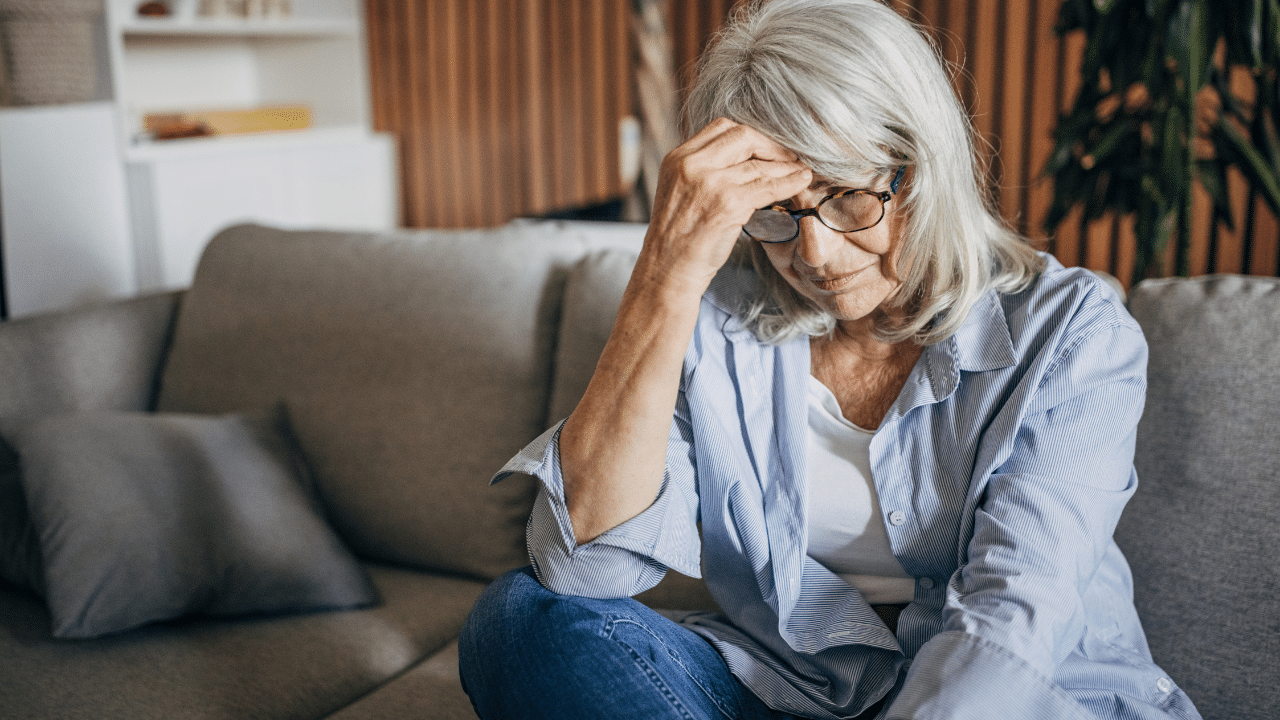
Have you ever caught yourself lying awake at night thinking, “What if I get dementia and don’t even recognize my own children?”
Or maybe you’ve had a health scare and found your mind immediately leaping forward — “This is just the beginning. It’s all downhill from here.” Perhaps you’ve felt that persistent, low-grade dread after a routine doctor’s appointment: “I’m afraid my health is going to seriously decline, and there’s nothing I can do to stop it.”
Or maybe it sounds like this: “I watched my dad struggle to get out of a chair, and I think — that’s going to be me. I’m going to lose my independence. I’m going to become a burden to my kids.”
If any of those thoughts feel familiar, you’re not alone. And — as new science is beginning to reveal — those fears may be doing more than keeping you up at night.
A groundbreaking study published in February 2026 in the journal Psychoneuroendocrinology (Rodrigues et al., 2026) found that women who experience higher levels of health-focused anxiety about aging show measurable signs of accelerated biological aging at the cellular level. In other words, the worry itself may be aging us from the inside out — steadily, biologically, and in ways we can actually measure.
Let’s talk about what this research actually found, what it means for you personally, professionally, and what we can do about it — together.
What Is “Aging Anxiety,” Really?
Aging anxiety isn’t just a vague discomfort about getting older. Researchers define it as worry or fear focused on specific domains of aging, and it shows up in several distinct forms:
- Health-focused aging anxiety — fears about illness, disability, losing independence, or becoming a burden to loved ones
- Appearance-focused aging anxiety — concerns about wrinkles, gray hair, and visible signs of aging
- Fertility and sexuality aging anxiety — worries about reproductive changes or sexual desirability
- Caregiving-related aging anxiety — the dread that comes from watching a parent decline and thinking, “That will be me someday”
These aren’t just passing thoughts. For many people — especially women in midlife — these are persistent, intrusive worries that circle back day after day.
What Does Health-Focused Aging Anxiety Actually Look Like?
Because health-focused aging anxiety was the domain most strongly linked to accelerated biological aging in this study, it’s worth pausing here to get specific. This isn’t a diagnosis — it’s a pattern of thinking that many of us recognize, even if we’ve never had a name for it.
Here are some examples of what health-focused aging anxiety sounds like in real life:
- “I’m afraid my health will seriously decline as I get older, and I won’t be able to do anything about it.”
- “I worry that I’ll get the same diseases I’m seeing in my aging parents. Cancer runs in my family, and I’m terrified it’s coming for me too.”
- “I’m going to lose my independence. I just know it. And I can’t stand the thought of depending on my children for everything.”
- “I think about becoming a burden on my family constantly. What if I need full-time care? What will that do to them?”
- “Every time I forget something, I panic — is this the beginning of dementia? Is this how it starts?”
- “I have arthritis now. I can feel my body changing. I keep thinking: what will I be unable to do in ten years? Twenty?”
- “I’ve watched three friends go through serious illnesses in the past year. I find myself waiting for my turn.”
These thoughts can show up as rumination — the mind returning again and again to feared futures involving illness, disability, cognitive decline, or loss of mobility, even when the person is currently relatively healthy. It often intensifies after a health scare, a difficult medical diagnosis in a friend or family member, or a significant birthday.
Caregiving-Related Aging Anxiety
There’s a particular kind of health-focused aging anxiety that I see regularly in my clinical work — and it deserves its own spotlight.
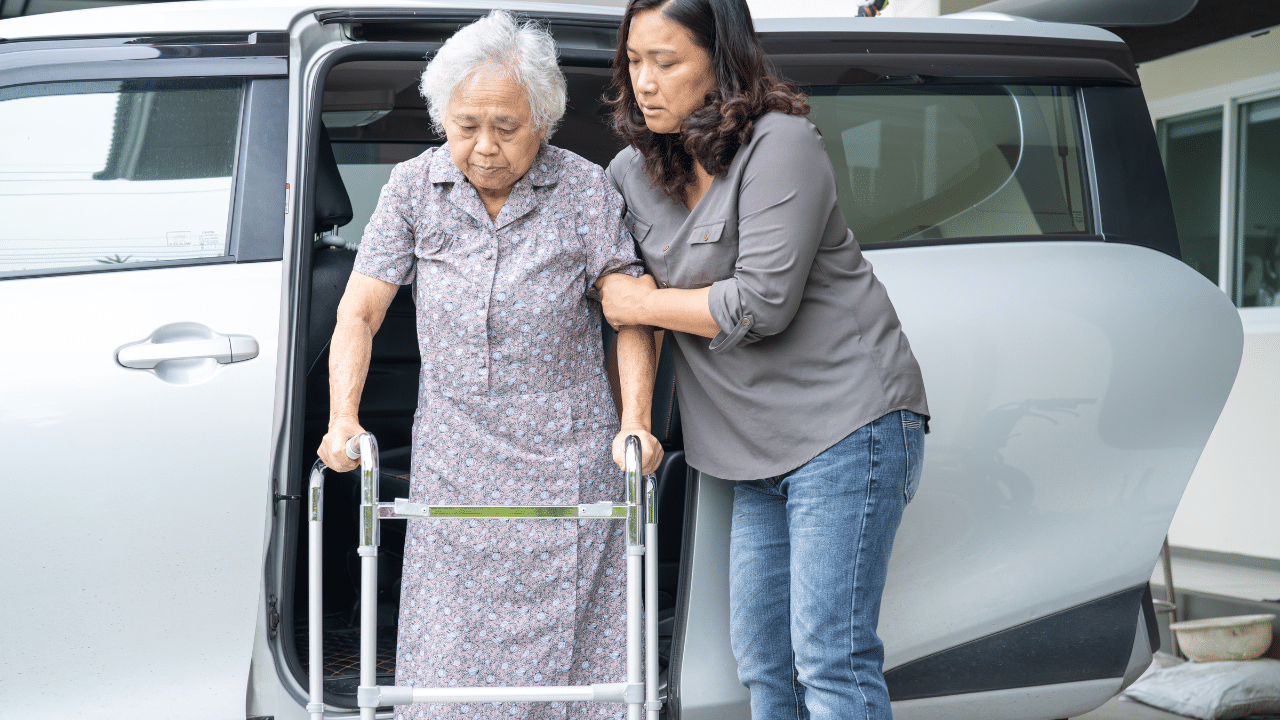
It happens when you’re in the thick of caregiving for an aging parent, and somewhere between managing their medications, accompanying them to appointments, and helping them with the things they used to do effortlessly — you start to see your own future in their struggle.
It can sound like:
- “I’m watching my mom lose her independence piece by piece. I’m terrified the same thing is going to happen to me.”
- “My dad was just diagnosed with dementia. We have the same genes. It’s only a matter of time.”
- “I’ve spent the last two years managing my mother’s health crises. When I’m her age, who is going to do that for me?”
- “Caring for my parents has shown me exactly what decline looks like up close. I can’t stop imagining myself there.”
While the researchers didn’t specifically measure caregiving-related aging anxiety as its own domain, they did note that caregiving and midlife role strain can powerfully feed into health-focused aging anxiety.
The mechanism runs something like this: watching a parent decline → triggers health-focused fears about your own future → that persistent, health-focused rumination is what appears linked to accelerated biological aging.
In other words, caregiving doesn’t cause accelerated aging directly. But for many people, it opens a door to the kind of chronic health-focused worry that may. For those of us supporting caregivers — or in the thick of it ourselves — it’s a reminder that the caregiving stress is only part of the story. The fear it stirs up about your own future? That deserves attention too.
What Did This Study Find? (A Plain-Language Look at the Methods)
Researchers at NYU School of Global Public Health, led by PhD student Mariana Rodrigues and senior author Dr. Adolfo Cuevas, studied a national sample of adult women in the United States. Participants completed surveys measuring their level of anxiety across the different aging domains I described above. Researchers then collected blood samples to measure biological aging using two sophisticated tools called epigenetic clocks:
- DunedinPACE — measures the pace of biological aging (how fast your cells are aging right now)
- GrimAge2 — estimates cumulative biological damage over time
Epigenetic clocks work by examining chemical changes in DNA — changes that don’t alter the genetic code itself but powerfully influence how genes are expressed. Think of your DNA as a piano and epigenetics as who’s pressing the keys, how hard, and how often. Chronic stress and anxiety can essentially keep hitting the wrong keys, over and over.
The study design was cross-sectional — meaning it captured a snapshot in time rather than following participants over years — which is an important limitation to keep in mind. Still, the findings were striking.
The Key Takeaways
1. Health-focused aging anxiety was most strongly linked to faster biological aging.
It wasn’t anxiety about aging in general that showed the most significant effect — it was specifically health-focused aging anxiety that was associated with accelerated epigenetic aging, as measured by the DunedinPACE epigenetic clock. Women who persistently worried about things like:
- “I’m afraid my health will seriously decline as I get older”
- “I’m going to get the same diseases as my parents”
- “I’m terrified of losing my independence to illness or disability”
- “I’ll become a burden to my family if my health deteriorates”
…showed the most significant cellular aging signatures. This kind of chronic, health-focused rumination — not general worry, not concern about appearance, not fear of fertility loss — appears to be what leaves a measurable biological mark.
2. Appearance and fertility worries did NOT show the same effect.
Anxiety about declining attractiveness and fertility were not significantly associated with epigenetic aging. This may be because health-related concerns are more common and persist over time, while worries about beauty and reproductive health may fade with age.
This distinction matters clinically. It tells us that it’s not aging anxiety in general that’s driving these biological changes — it’s the persistent, health-focused rumination that seems to leave its mark on the body.
3. Coping behaviors may be a key mechanism.
Here’s a finding that I think is especially important for practice: when the researchers adjusted their analyses to control for health behaviors like smoking and alcohol use, the association between aging anxiety and epigenetic aging decreased and was no longer significant.
This strongly suggests that how we cope with aging anxiety matters enormously. People who are anxious about their health may turn to smoking, alcohol, poor sleep, or social withdrawal — and those behaviors, in turn, accelerate biological aging. The anxiety sets off a domino effect.
4. Subjective experience shapes objective biology.
Perhaps the most profound takeaway comes from the researchers themselves: “Our research suggests that subjective experiences may be driving objective measures of aging. Aging-related anxiety is not merely a psychological concern, but may leave a mark on the body with real health consequences.”
This is not a small claim. It aligns beautifully with decades of psychosomatic research showing that the mind and body are not separate systems. What happens in our psychology ripples through our physiology.
How Do Midlife Transitions and Caregiving Impact Health-Focused Aging Anxiety
I work with adults across the lifespan, and I see this pattern often. It doesn’t always look like caregiving stress. Sometimes it looks like this:
A 58-year-old woman who has been healthy her whole life starts fixating on every physical symptom. A headache becomes a potential brain tumor. Fatigue becomes the first sign of something serious. She finds herself googling symptoms at 2am, convinced she’s already in decline.
Or a 63-year-old man who retired in good health but now can’t stop thinking about his future. He watched two colleagues his age die within a year of retirement, and now he’s consumed by the thought: “Am I going to fall apart now that I’m not working? What if I lose my mental sharpness? What if I can’t live independently?”
Or a 52-year-old woman juggling caregiving for an aging parent, her career, and her children. She watches her mother lose the ability to live independently, and steadily, persistently, she begins to dread her own future: “When I’m her age, I’ll be sick and unable to manage everything. I’m going to end up the same way.”
Each of these is health-focused aging anxiety. It can look like hypervigilance about symptoms, dread about the future, or the grief of watching an older loved one decline and turning that grief into a prediction about yourself.
That dread — whatever form it takes — is exactly what this study identified as a potential driver of accelerated biological aging. And the profound irony is this: the very worry about becoming ill may be contributing to biological processes that increase that risk.
This is not about blame. It’s about understanding. And understanding opens the door to change.
What This Means for You.
If you recognize yourself in any of this — if health-focused aging anxiety is something you live with — here is what I want you to know:
You are not alone, and this is not a personal failing.
Aging anxiety is a normal response to living in a society that often frames aging as decline. Cultural narratives, ageist media, and the very real grief of watching loved ones age all feed this anxiety.
Anxiety is Modifiable and Treatable.
This is one of the most hopeful findings in the study — “Our research identifies aging anxiety as a measurable and modifiable psychological determinant that seems to be shaping aging biology.” Modifiable means changeable. That is powerful.
Practical steps you can take:
- Notice the rumination. When you find yourself spiraling into “what if I get sick” thoughts, gently name it: “This is aging anxiety.” Naming it creates a small but important distance from it.
- Examine your coping strategies. Are you reaching for a glass of wine to quiet the worry? Are you losing sleep? Are you avoiding medical checkups because you’re afraid of what you might find? These are the behaviors that may be driving the biological harm — and they’re worth addressing.
- Seek support. Anxiety is treatable at every stage of life from childhood to late life. Therapy (and medication when indicated) can help you build a healthier relationship with aging.
- Consider your mindset on aging. Research consistently shows that people who hold more positive views of their own aging live longer, healthier lives (Levy et al., 2002, Journal of Personality and Social Psychology). Challenging internalized ageism — including your own — is genuinely protective.
What This Means for Professional Practice
For those of us working in clinical, medical, or social service settings, this study is a call to action.
Screen for aging anxiety.
We routinely screen for depression and generalized anxiety, but aging-specific anxiety often flies under the radar. Asking clients directly — “Do you find yourself worrying a lot about what your health will look like as you get older?” — can open doors that otherwise stay closed.
Pay special attention to midlife caregivers.
The caregiving role is a powerful incubator for health-focused aging anxiety. Clients who are caring for aging parents are frequently witnessing decline up close and projecting that future onto themselves. This population deserves intentional support.
Integrate coping assessment.
Because the pathway from anxiety to accelerated aging appears to run through behaviors like smoking and alcohol use, assessing and addressing these coping strategies is clinically essential — not just for physical health, but for psychological wellbeing.
Advocate for aging-positive environments.
“We need to start a discourse about how we as a society — through our norms, structural factors, and interpersonal relationships — address the challenges of aging.” This is a call for culture change, and those of us in mental health are well-positioned to lead it.
A Final Word
Aging is not the enemy. Fear of aging — especially when it becomes a chronic, health-focused rumination — may be doing real harm to our bodies. But here’s the message I hope you hear, loud and clear: the same science that reveals this connection also reminds us that the mind is powerful, and psychological wellbeing is biological wellbeing.
Taking care of your mental health isn’t separate from taking care of your physical health. It is your physical health.
If this article stirred something in you — a recognition, a concern, a question — I hope you’ll sit with it. And I hope you’ll reach out, whether to a trusted therapist, your physician, or a community that supports healthy aging.
You deserve to age without fear. And the research is beginning to show us that this isn’t just a nice idea — it may be one of the most important things you can do for your long-term health.

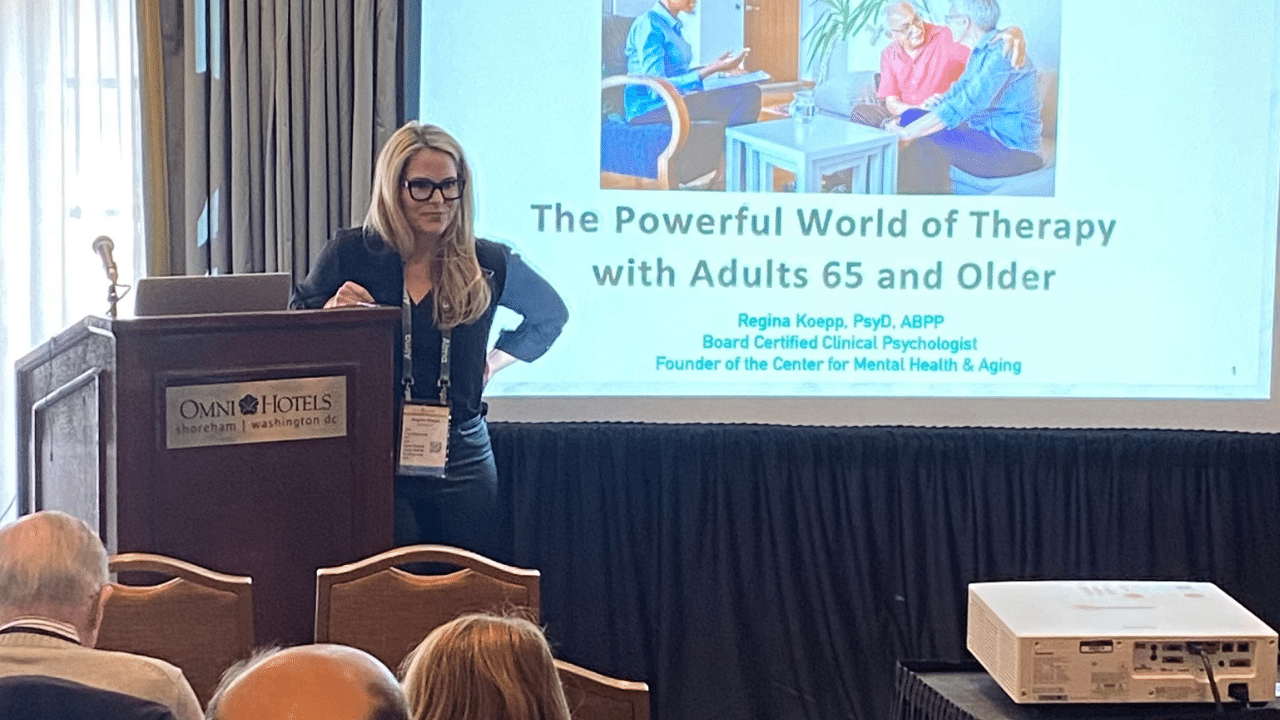
Dr. Regina Koepp is a board certified clinical psychologist, clinical geropsychologist, and founder and CEO of the Center for Mental Health & Aging: the “go to” place for mental health and aging. Dr. Koepp is a sought after speaker on the topics of mental health and aging, caregiving, ageism, resilience, intimacy in the context of life altering Illness, and dementia and sexual expression. Dr. Koepp is on a mission to ensure mental health and belonging for older adults, because every person at every age is worthy of healing, transformation, and love. Learn more about Dr. Regina Koepp here.
Regina Koepp, PsyD, ABPP










































Want More? Read Our Most Recent Posts


Older adults deserve high quality mental health care.
Therapists deserve the training to provide that care.