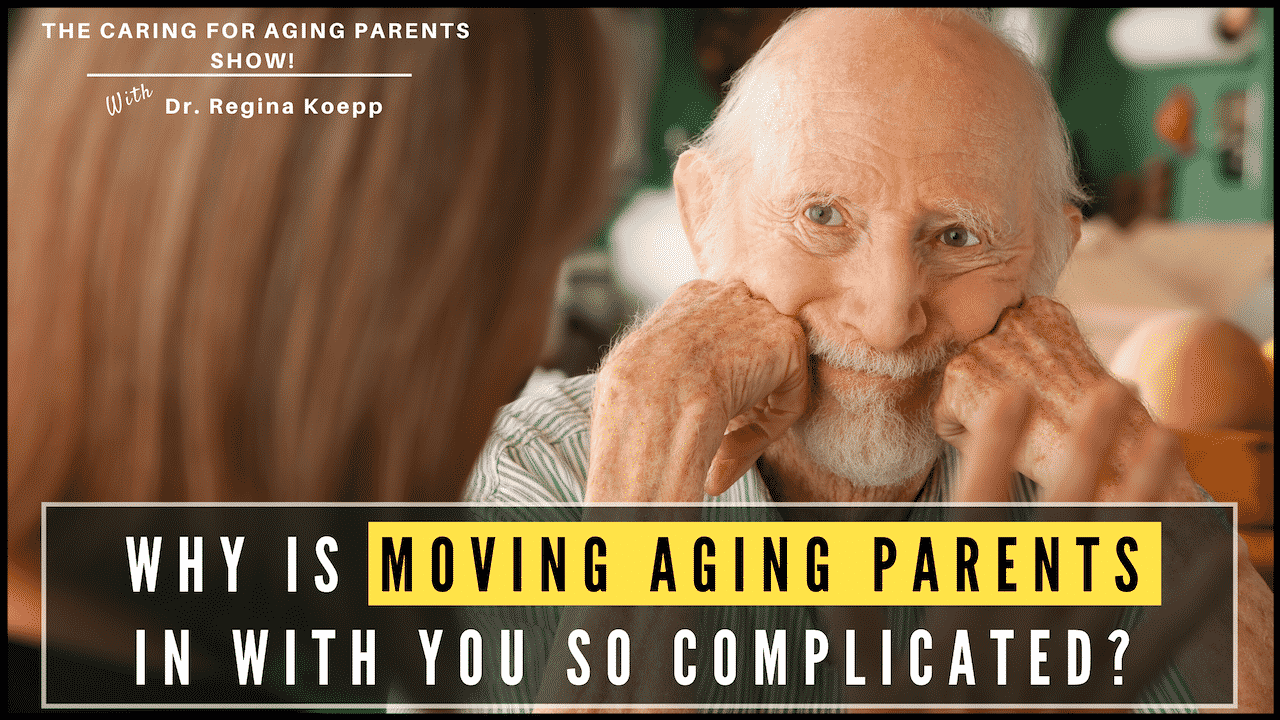
The idea of moving your aging parents in with you is really complicated. If you’re facing this possibility AND you’re in a relationship, this can up the ante of complications.
A few weeks ago, I was featured in the Chicago Tribune in an article that had to do with how to go about making the decision to move your aging parents in with you! So, I decided to create a 3-part series on moving aging parents in with you!
The transition of moving aging parents in with you is not only practically challenging, it’s emotionally REALLY COMPLICATED!! So, I thought it would be helpful to create an episode answering the question, “Why Is Moving Aging Parents in With You So Complicated?”
To answer the question, Why Is Moving Aging Parents in With You So Complicated? I have to discuss three complexities that you and your partner will indeed experience as you approach moving aging parents (or in laws) in with you!
Complexity #1: Changes To Your Family Structure!
Each family has a structure and a system. A family structure includes all the people who make up a family and each person’s roles and responsibilities. A family system is how the family operates, how they interact, how they solve problems, how they manage conflict, and so on. The system also includes roles and responsibilities.
Let me illustrate this for you: Imagine the family as a mobile, each person has a place in the family and the family is in balance. Even if a family is dysfunctional, they often find their balance, which you’ll also hear me refer to as homeostasis– or the family’s norm.

When a piece is added to the mobile (like with the birth of a baby, or with having aging parents move in with you), or taken away (like with a young adult leaving for college, or a parent dying), this disrupts the balance and creates lots of challenges – even for the healthiest family. When families go through structural changes, it can take time to find a new homeostasis, or a new normal.
To put it another way, you and your partner may have been living for years or decades separate from your aging parents and have created your own way of doing things (your own system), and now, if you’re considering moving aging parents in with you, it has the effect of changing not only your family structure (how many people live in your home and their roles), but your family system, including who you’re responsible for, the roles you have with different members of your family, the ways you go about doing things, the time it takes to accomplish basic tasks, and so on! On the surface these can seem like subtle changes, but they are actually HUGE and can be challenging even for the healthiest couple or family.
Complexity #2: Changes In Your Parent’s Health Status
If you’re considering having your aging parents move in with you, this likely means that your aging parents are needing support or assistance with their basic needs and are not only moving in with YOU, they are moving into a more vulnerable time in their life.

This may put physical and emotional demands on you and your partner, which means that at the same time your family structure is changing, you will also have more demands and stress.
As a result, you’re bound to have all sorts of feelings, including fears about the the future, like:
- What will happen to my life?
- What will happen to my parent’s life?
- What will happen to my career?
- What will happen to my relationship?
…and so much more.
Complexity #3: You and Your Partner Were Raised Differently
The third complexity has to do simply with you and your partner being raised differently. You had different parents, different family structures, different family systems, and different roles and values!
Your relationship with your aging parents is unique and your partner’s relationship with their aging parents is unique as well. So naturally, you and your partner are bound to disagree! It’s expected that you’ll have different views on caregiving and have different perspectives on your roles in the family and what you value!
If you’re caring for aging parents, I have a freebie just for you, its called the Ultimate Caring for Aging Parents Checklist! Download it here, or by clicking the image below!

Don’t forget to share this video with your friends who are caring for their aging parents. Because nobody should have to do this caregiving-thing alone!
See you next Wednesday where I’ll talk about what to do if you and your partner don’t agree on moving your aging parents in with you!
Lots of love to you and your family!
Dr. Regina Koepp
PS: Here’s a link to the Chicago Tribune article that I was featured in!
Check out these related episodes:
- What Are The Different Living Environments for Older Adults? (Ep #008)
- What You Should Know About Living Options for Older Adults! (Ep #009)
- How To Find Senior Living Options: A Step-By Step Guide! (Ep #010)
- Moving Aging Parents in With You? These 7 Tips Will Help! (Ep #021)
- Why Is Moving Aging Parents in With You So Complicated? (Ep #022)

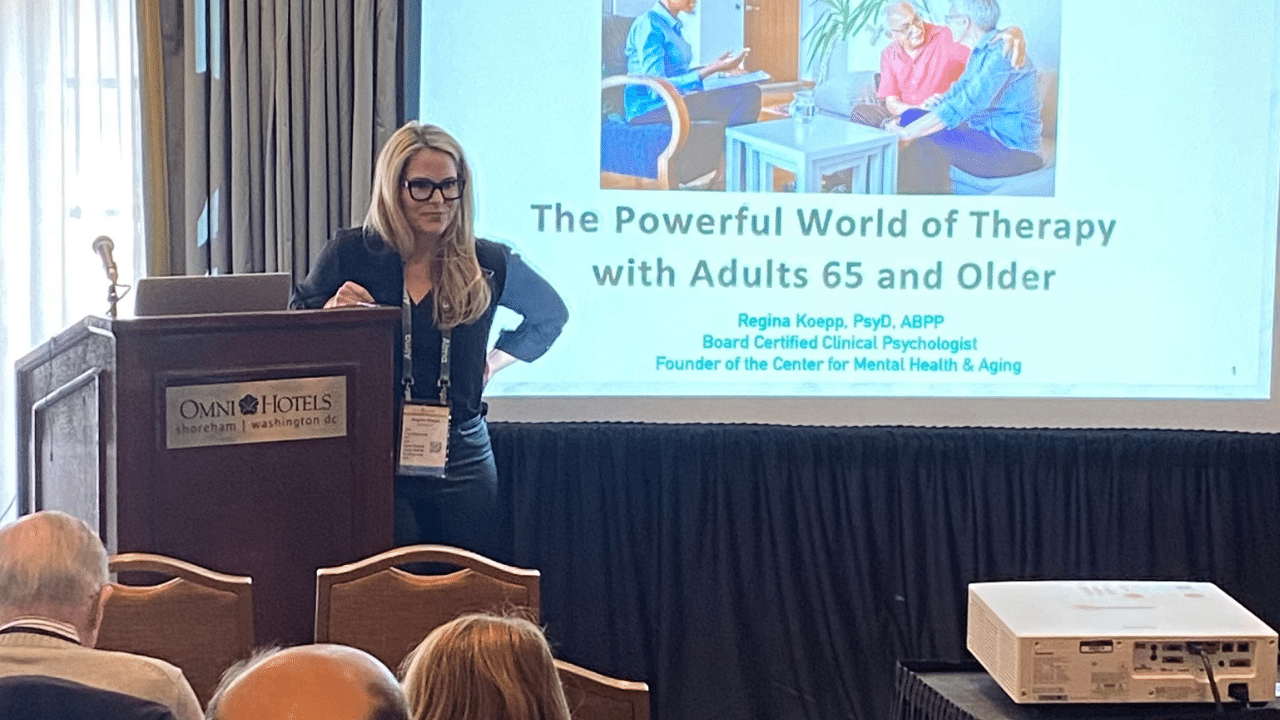
Dr. Regina Koepp is a board certified clinical psychologist, clinical geropsychologist, and founder and CEO of the Center for Mental Health & Aging: the “go to” place for mental health and aging. Dr. Koepp is a sought after speaker on the topics of mental health and aging, caregiving, ageism, resilience, intimacy in the context of life altering Illness, and dementia and sexual expression. Dr. Koepp is on a mission to ensure mental health and belonging for older adults, because every person at every age is worthy of healing, transformation, and love. Learn more about Dr. Regina Koepp here.
Regina Koepp, PsyD, ABPP





















































































Want More? Read Our Most Recent Posts


Older adults deserve high quality mental health care.
Therapists deserve the training to provide that care.