
Helping aging parents move into a senior living or assisted living environment can be overwhelming, and emotions can easily escalate. Here are 12 tips for managing those emotions during difficult conversations with elderly parents.
1. Expect that this will be emotional.
Expect that this is going to be emotional. Know that it is reasonable that this is emotional and that there will be some fallout. Everyone is entitled to their feelings about this transition. Starting this discussion with the understanding that this will indeed be an emotional conversation will help you get through it.
2. Prepare for “the Talk.”
Before you have this conversation, take the time to prepare. Here’s how:
- Do a Dress Rehearsal
It can help to talk this conversation through with someone you trust before you bring it up with your loved one (like a dress rehearsal).
This has a couple of benefits:
- It will help you to clarify exactly what you want to say and how to say it.
- It will help you discover some of your own feelings and allow you to begin to process them, which brings us to the next tip…
- Work Through Your Feelings First
It’s normal to have all sorts of feelings about your loved one moving AND feelings about having to have this conversation in the first place. Any of these sound familiar?
- Anger: “I hate that I’m even in this position of having to initiate this conversation” (ROAR!!)
- Resentment: “I’m not the only one in my loved one’s life. Why am I the one who has to have this conversation? I resent my sister for not stepping up ”
- Sadness: “Seeing my dad lose his independence makes me want to cry… I think of what else he’ll be losing down the road.”
- Fear: “What if the burden of all of my mom’s needs falls on me?”
- Guilt: “I feel like a bad daughter for not being able to move my loved one in with me.”
Processing your own feelings before talking with your loved one will help you to stay focused, grounded, and empathic when you actually have this conversation.
3. Use Your Empathy Skills.
Just like YOU have all sorts of feelings about your loved one moving, your loved one will have all sorts of feelings about this major transition, too.
If you make the time to work through your own feelings, it’ll be much easier to be empathic when your loved one expresses their feelings. Empathy is the ability to understand and share in another person’s feelings.
Your loved one may have some of these feelings:
- Anger: “Who are you to tell me I need to move!”
- Fear: “How am I gonna do what I need to do? Go where I need to go?
- Sadness: “Losing my independence and my home is a tremendous loss, it makes me think of all my other losses (friends, family, etc)… and all of the other losses to come”
The more steady and grounded you are in this conversation, the more likely you are to have success and come to an agreement.
Here are some tips for being empathic:
Soften your tone and practice listening. Listen for the anger, sadness, and fear. Don’t run away from your loved one’s feelings, instead, move toward them by trying these empathic statements:
- If your aging parent is angry, try saying: “This is so tough and this is a really difficult to conversation to have. I admire you for sticking it out.”
- If your loved one expresses sadness, you might say: “This is such a painful loss. I’m so sorry.”
- If they expresses fear, you might say: “It makes sense to be afraid of what will happen when you move. If you let me, I’ll be here along the way and we can figure it out together.”
WHAT NOT TO SAY:
Don’t say: “I know how you feel”. By saying “I know how you feel”, you aren’t taking the time to understand the feelings and you definitely aren’t putting yourself in a position to share in the feelings. Saying I know how you feel shuts down the conversation, rather than opening the conversation up.
Giving your loved one the room to express themselves with you listening and being empathic will help them adjust to this move AND strengthen the relationship between you.
4. Be Respectful
Acknowledge that this is a difficult subject for everyone and be respectful of your aging loved one. You may have been thinking about your loved one moving longer than they have, so give them some space and grace to adjust to this idea.
Don’t label or call names, like “you’re demented, you have to move”, or “you’re acting like a child”, or “you’re so stubborn and rigid”– this will push them away and make them lose trust in you. Use respectful language, even when you’re frustrated.
Another way to be respectful, is to respect that this is a process and that it will take some time for your loved one to adjust to this change in their life.
5. Be Present! Stay on the Topic at Hand
When talking with our aging loved ones, it can be so easy to get sucked into old relationship dynamics and patterns. Like…
“Ugh, she’s always been stubborn, I’ve never been able to get through to her. She’s never been able to see me- never really listened to me!”
If this happens, all sorts of feelings are gonna bubble to the surface and you may feel the need to protect yourself by arguing or shutting down. Unfortunately, this will likely lead to ineffective communication… leaving you both disappointed.
During the conversation, if your mind (or feelings) shift back to times in your relationship where there has been pain or conflict, simply notice it, and shift the focus back on the conversation at hand. Don’t let feelings from the past derail this conversation.
6. Identify next steps
If things are going well and your older loved one is able, ask them come up with next steps so you don’t have to do all of the work and so that this experience is shared. Be positive and supportive, acknowledging the difficulty of this decision.
You could offer some suggestions for next steps, like:
- “Who do you know who has moved to an assisted living community?”
- “What was their experience like?”
- “Would you be open to talking with them and hearing how they got through this.”
7. Suggest making a list of pros and cons of all the various living options.
Is your loved one on the fence? A list of the pros and cons of moving versus staying put may help to clarify some points and put things in perspective financially, practically, and emotionally.
8. Take a break from the conversation if needed.
Recognize that this will be the first of many conversations. The first conversation should not be the last conversation. When things get heated, take a break and offer to talk about this again at a later date. Let the older adult sit with this for awhile, but follow up at a later time. The second and third attempts at this discussion may well be easier for everyone
9. Keep the older adult involved in the decision as much as possible, even when it’s difficult.
The more you’re able to include your aging parent in this decision, the better. This will set your loved one up for success in adjusting to the new living environment.
10. Be positive and supportive, and at the same time acknowledge the difficulty of this decision.
Try to simultaneously hold compassion for your loved one, the difficulty of this decision for all involved, and your own thoughts and needs.
11. Give your aging loved one and yourself some space and grace to adjust.
This move is a big emotional and practical change and is hard on even the healthiest of families. So, be patient with yourself and your aging loved one.
12. Try to limit other stressful life changes during the adjustment phase (if you can).
Adjustments and transitions take time and energy. Your aging loved one (or staff at the new living environment) may be calling on you more than normal. It can help to limit other big life changes (even positive ones), like a career change, or starting a start-up during this initial adjustment phase. Sometimes, it’s not possible to prevent other big life changes, but if you can limit other stressful changes in your life, do it! This goes for you and your older loved one.
Ready to find senior living? 3 Next steps to consider
1. Familiarize yourself with different types of living environments.
It’s very common for older adults to fear that they are “going to be put away” in a nursing home. When in fact, even if they need assisted living, they may not ever need skilled nursing as in the form of a nursing home. Download the Caring for Aging Parents Checklist for a list of the various senior living options
2. Consider what city the older adult may live in- or be moving to.
Finances and proximity to family play a large role in this decision for many families. For example: long distance caregivers tend to spend more money annually than caregivers who live near their older adult loved ones.
3. Identify what is available
Once you identify what type of living environment (assisted living community, personal care home, continuing care retirement community, skilled nursing home, etc) and the city, do your homework to identify what is available. Here are some strategies for finding living environments:
- Contact your local Area Agencies on Aging (AAA) and ask for a list of senior living options. Ask if they have senior living advisors available to help.
- Contact an independent Senior Living Advisor: google senior living advisors by city.
- Contact a senior housing locator like Seniorly or A Place For Mom. If you sign up on their website, you’ll likely be called by a Senior Living Advisor. Senior Living Advisors may be non-licensed telephone helpers who help to gather information and advise you on different types of senior living or housing options.
Click here to listen to the podcast
Download the free Caring for Aging Parents Checklist


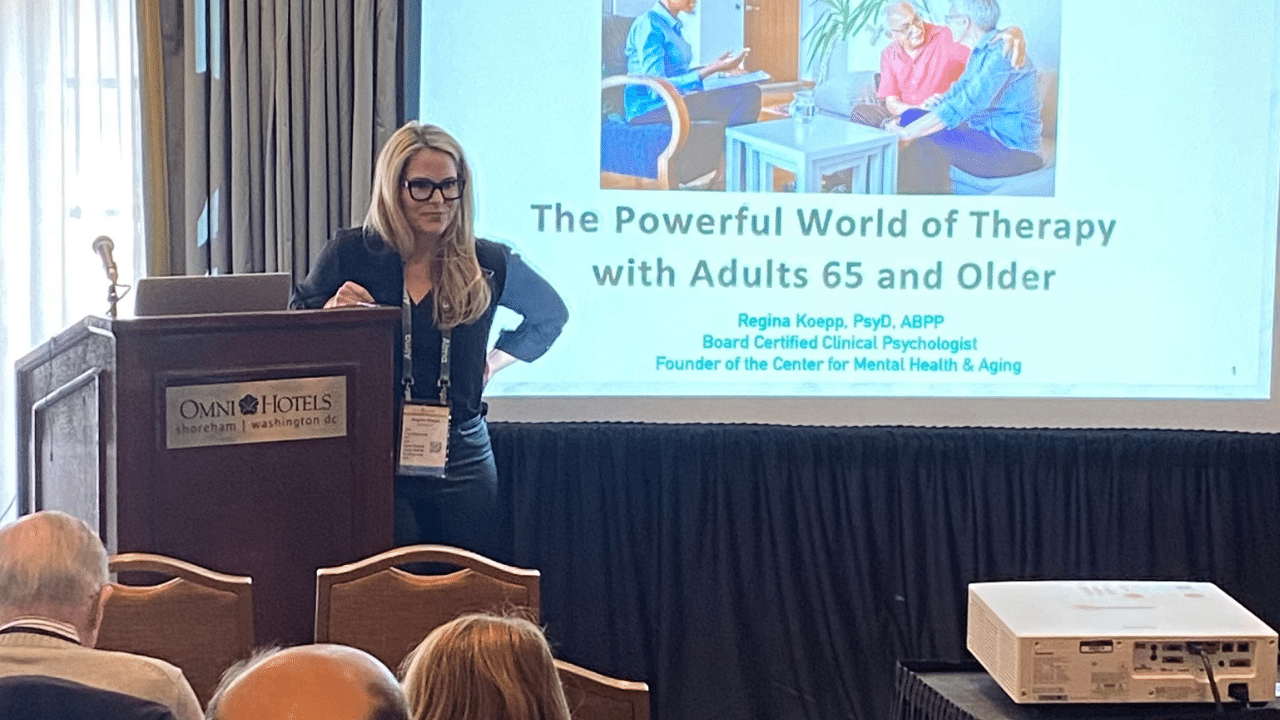
Dr. Regina Koepp is a board certified clinical psychologist, clinical geropsychologist, and founder and CEO of the Center for Mental Health & Aging: the “go to” place for mental health and aging. Dr. Koepp is a sought after speaker on the topics of mental health and aging, caregiving, ageism, resilience, intimacy in the context of life altering Illness, and dementia and sexual expression. Dr. Koepp is on a mission to ensure mental health and belonging for older adults, because every person at every age is worthy of healing, transformation, and love. Learn more about Dr. Regina Koepp here.
Regina Koepp, PsyD, ABPP























































































Want More? Read Our Most Recent Posts


Older adults deserve high quality mental health care.
Therapists deserve the training to provide that care.