
There may come a time when you’re faced with the conversation of talking with your aging parents about moving into a senior living or assisted living community. Many people dread this conversation.
Even simply starting the conversation can bring up all sorts of worry and feelings of guilt and shame. To help, I’ve created 6 strategies to try when starting the assisted living talk.
1. Don’t wait until there is a crisis
Starting these conversations long before your loved one has a medical, mental health, or financial crisis is the best approach. Your aging loved ones are going to have A LOT of transitions in their lives and some of these transitions are going to be harder than others.In the midst of crises, people tend to be highly emotional and super stressed. As a result, they don’t tend to communicate effectively.
2. Start the Conversation sooner than you think you need to.
This can give you and your loved ones time to think about their needs and wishes. Starting the conversation early helps to ensure that you’re asking your loved one what they want rather than telling your loved one how things are going to be in their own aging process.
The sooner you can begin this conversation with your loved one about the possibility of moving and the types of environments that are available, the better.
If your aging loved one has to make this difficult decision under the pressure of a short time-line, emotions may be amplified and you may experience more resistance.
3. Have the conversation during a neutral time
When people are in chaos they don’t tend to communicate the most effectively. On the other hand, when people are celebrating, they don’t typically want to stop celebrating to talk about something heavy- they want to enjoy themselves. Finding a neutral time will take some of the emotional intensity out of what will naturally be a complicated talk.
4. Choose the best messenger.
Consider who would be the best person to start this conversation with the older adult. A trusted doctor (following an assessment), family members, a friend, a pastor.
5. Ask your loved ones about their wishes
Instead of telling your loved one what YOU plan to do, ask them about what they want related to their medical, mental health, financial, and living needs. Who knows? They may surprise you.
6. Work together as a team
As you start out in these conversations, it can really help to imagine that you and your loved one are on the same team, tackling a challenge and going through the transition together.

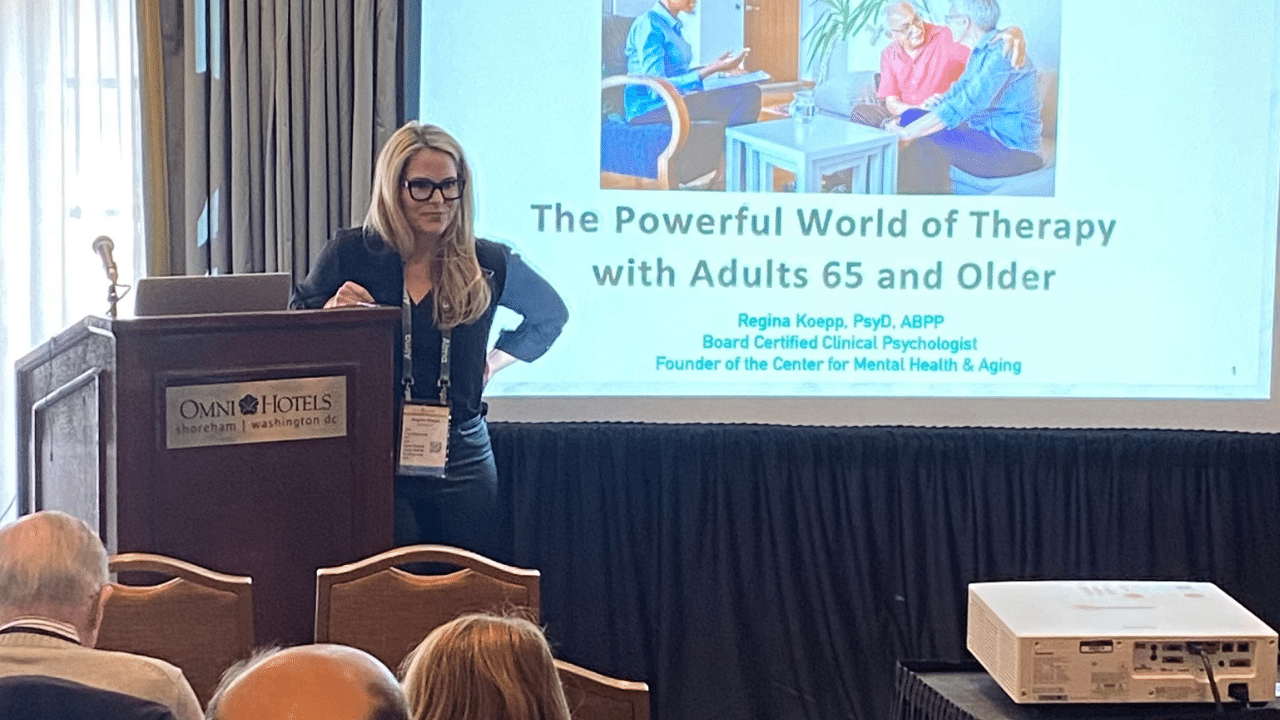
Dr. Regina Koepp is a board certified clinical psychologist, clinical geropsychologist, and founder and CEO of the Center for Mental Health & Aging: the “go to” place for mental health and aging. Dr. Koepp is a sought after speaker on the topics of mental health and aging, caregiving, ageism, resilience, intimacy in the context of life altering Illness, and dementia and sexual expression. Dr. Koepp is on a mission to ensure mental health and belonging for older adults, because every person at every age is worthy of healing, transformation, and love. Learn more about Dr. Regina Koepp here.
Regina Koepp, PsyD, ABPP




















































































Want More? Read Our Most Recent Posts


Older adults deserve high quality mental health care.
Therapists deserve the training to provide that care.